Thursday, June 16, 2011

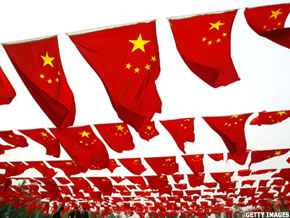
A Chinese Revolt on a Plane

There are definitely cultural differences between Americans and Chinese. Here's a personal story to illustrate how different they are -- and why it shows how the government needs to tend to the people's needs.

Read the full post on Forbes.

Sphere: Related Content

Tuesday, June 14, 2011

5 Observations About China

By Eric Jackson
RealMoney Contributor

6/13/2011 10:45 AM EDT
Click here for more stories by Eric Jackson


It's been 10 days since I left for China, and since I've been over here, Chinese tech stocks have taken a nasty fall.

Several folks from back in the U.S. who have been following my trip updates on Twitter have asked me what differences I have noticed since my last trip to China in November 2010 and whether China's growth story is still intact.

Here are five things I've noticed about China right now.

1. China's growth story is still going strong, but it's definitely slowed a little.

I got a lot of questions on this, since back in the States, we hear the news headlines about PMI and GDP growth in China cooling things down. People want to know if this is accurate or not. I went around to all the big cities on this trip (Beijing, Shanghai, Hangzhou, Guangzhou and Shenzhen). I met with about a dozen companies. I can only give my anecdotal impressions, but I would say that growth is still phenomenal relative to the U.S.

The number of cranes erecting buildings everywhere is still hard to fathom. How quickly new buildings have gone up since my last trip is also amazing to see.

That said, though, relative to six months ago, the pace of growth seems to have slowed a touch. So, the actions that the government has taken have definitely had an effect.

2. Chinese property developers have been pinched by the government's tightening measures and prices are flat, so the actions are working.

People always want to know about whether there's a housing bubble in China and if it's about to burst. I don't think that's going to happen in the near term. The steps that the government took to cool down the property market have worked. You hear of some property developers now being caught in a situation where they got themselves involved in quite a number of large projects and now these measures are pinching them. Prices are stable at the moment in many cities -- not down but not up.

...

[*** This post is an excerpt of the full article, available by clicking here to go to RealMoney.com. Note: subscription required. ***]

Sphere: Related Content

Monday, June 13, 2011

Q&A on Doing Business in China

By Eric Jackson, Senior Contributor06/08/11 - 06:00 AM EDT

NEW YORK (TheStreet) -- I have been on a two-week trip to China since last weekend. Before I left, I asked several American colleagues if they had any questions they'd like me to ask the "real" Chinese about their perceptions of both China and the U.S.

On Monday, I met with a group of my followers on the Twitter-like SINA(SINA_) Weibo service. The event was informal and meant simply to be an exchange of ideas. There were representatives from tech firms, resource companies, and Chinese Internet firms.


Here is a summary of their comments to several of my questions:

Q: Do you worry about a U.S. default weighing on China or China's investment in U.S. Treasuries?

A: No. In general, they thought that the U.S. would be forced to take action in order to protect its own self-interests and those of U.S. Treasury holders. They also thought most average Chinese made no link between the U.S. debt and their own economic interests.

Q: Do you worry that there will be an economic crash in China caused by itself?

A: No. Americans don't understand that the Chinese take a long view to their investments. If their stocks were to drop suddenly, the Chinese would likely stick it out with the stock as opposed to Americans who would immediately sell it.

Q: Do you think the next Chinese president and premier will be more conservative or more permissive?

A: More conservative.

Q: What do you think of the way Jack Ma of Alibaba handled the transition of Alipay, negatively impacting Yahoo!(YHOO_) and Softbank?

A: Most educated people think that Jack Ma didn't do the right thing in the transfer. They can't understand why he would do such a thing. This has seemed very suspicious from the start.

Q: Why do you think so many American companies fail wheLinkn they come to China?

A: The most important point is that the U.S. company imposes a top-down management structure that is too rigid for the local management team. The companies which win are generally the ones who have given their team total autonomy to run their businesses the way they see fit for the local market. When the Americans put what they know has worked in the U.S., they tend to force local Chinese to follow orders, which isolates them.

.......

[** This post is an excerpt of the full article, which is available on TheStreet.com by clicking here. Free Site.**]

Sphere: Related Content

No Panic Here in China

By Eric Jackson
RealMoney Contributor

6/9/2011 10:00 AM EDT
Click here for more stories by Eric Jackson


I have been in China for the past week, and have had a chance to visit a number of Chinese Internet firms -- including Tencent, Perfect World(PWRD - commentary - Trade Now), NetQin (NQ- commentary - Trade Now), NetEase (NTES -commentary - Trade Now), Baidu (BIDU -commentary - Trade Now) and AirMedia (AMCN -commentary - Trade Now).

It's been a down market for the last six trading days, and Chinese stocks have been hit hard, including the former leaders such as Sina (SINA -commentary - Trade Now), Sohu (SOHU -commentary - Trade Now) and Youku (YOKU -commentary - Trade Now).

The mood amongst most of these companies, however, remains upbeat. Most now point to the recent worries about Chinese frauds as the reason for the bigger pullback in the entire sector. Most say they have received no uptick in questions from their own investors about their auditors or their own corporate governance.

One thing I couldn't help but notice, as I drove around Beijing, was the large number of advertisements being bought in the offline world (as in buses, billboards or kiosks) for new private consumer-oriented e-commerce sites such asLashou.com (the No. 1 group-buying site in China), VANCL (a clothing retailer) and Tmall.com, which is part of Taobao (of whichYahoo! (YHOO - commentary - Trade Now) is a 40% owner).

Most of these companies expect to hold initial public offerings in the next six to 18 months. They have obviously been trying to drive traffic to their sites in the last few months in orLinkder to dress themselves up for investors -- and they don't mind spending money to do it.

Earlier this week I met with a company called Letao.com, which is also private but experiencing extraordinary growth selling shoes online. Some refer to it as the Zappos of China even though there are subtle differences that, in some ways, make the company a more attractive business. Letao is probably further away from an IPO than some of those other companies I've mentioned. Even though they have money to spend on advertising, it is trying to do this wisely, through search marketing and group buying primarily. Nevertheless, Letao is aware of the feeding frenzy for buying ads of all kinds in China now, and it sees how this is leading to higher ad prices each time they renew.

...

[*** This post is an excerpt of the full article, available by clicking here to go to RealMoney.com. Note: subscription required. ***]

Sphere: Related Content

Sunday, June 12, 2011

Groupon Is a Buy, but at What Price?

By Eric Jackson
RealMoney Contributor

6/6/2011 10:45 AM EDT
Click here for more stories by Eric Jackson


Most of the chatter and analysis of the Groupon initial public offering last Thursday was overwhelmingly negative.

I'm bullish on the company and its prospects in the long term and I don't think the bears have much depth to their analysis. That may come in time. But whether you should buy into the IPO all depends on price.

Here are the biggest arguments that the bears have seem to have so far, and my rebuttals:

1. This company is losing a lot of money, about $117 million in operating income in the last quarter.

Yes, it is. But when did you last see a company take its annualized revenue rate to $2.6 billion from $97,000 in three years? Never. To put that in comparison, LinkedIn (LNKD - commentary -Trade Now) went to $830 million from $77 million annualized run rate over the same period. This is not the late-90s dot-com phenomenon that was piling up losses on minimal revenue.

2. The only reason they're making money is that they're selling inventory at a loss, and that's not a business.

This is not Amazon.com (AMZN - commentary -Trade Now) with inventory and warehouses. They're selling virtual inventory. They are selling nothing at a loss. They are fulfilling a service in exactly the same way that Priceline (PCLN -commentary - Trade Now) and many other Web companies do, marketing a service that wouldn't otherwise be sold. That's why they get paid. The real reason they're losing money is because they've been making a huge investment in sales and marketing. They've gone from zero to 7,000 people in three years.

3. They will have to keep hiring people at this same rate in order to keep growing their revenue, so they will keep losing money.

Companies make lumpy investments in people and other capital expenditures all the time. Google just got raked over the coals by its investors for its abnormal bump in labor expenses. But this was a one-time bonus. Amazon.com spent a lot recently on their warehouses. They won't have to do this for the next couple of years again. Groupon does not need to keep hiring people the way they have.

4. The company is trying to fool us by getting us to focus on metrics that are non-traditional.

They suggested investors judge them by something called Consolidated Segment Operating Income (or CSOI). So what? They say right in the filing that this single metric shouldn'tLink be the sole way people judge them. What single metric is effective that way? Yes, CSOI puts Groupon's growth in a very favorable light, but it's not the sign of the apocalypse.

5. The founders have taken $28 million in holdings off the table.

A lot of Web companies these days, compared to 10 years ago, have taken money off the table. That's why SecondMarket and SharesPost are in business. Insiders will still have to hold the majority of their shares for a long time and incentives are still aligned with those of investors.

...

[*** This post is an excerpt of the full article, available by clicking here to go to RealMoney.com. Note: subscription required. ***]

Sphere: Related Content

Friday, June 03, 2011

The Groupspawn IPO: What Hath It Wrought?

Groupon’s (GRPN) Andrew Mason is wacky.

Even though he killed at the All Things D conference this week, I just don’t get his sense of humor. And I generally don’t like investing in companies led by 30 year olds with no read work experience.

Read the full post on Forbes here.

Sphere: Related Content

Thursday, June 02, 2011

All Quiet on the Google Front

By Eric Jackson
RealMoney Contributor

6/2/2011 12:15 PM EDT
Click here for more stories by Eric Jackson

We're now two months into the reign of Larry Page as the CEO of Google (GOOG -commentary - Trade Now) and, unless you count his canned comments at the start of the April earnings call, we've yet to hear him speak publicly about the company.

There hasn't even been a quick comment like, "I'm conducting a thorough assessment of all Google operations and will soon report on my strategy for the company." Nothing.

Instead it's been left to his lieutenants and his old boss to make the only public statements about what life is like under Larry. "It's invigorating," said Marissa Mayer a couple of weeks ago, comparing a day working at Google to a whiff of Irish Spring in your morning shower.

"Larry, of course, is brilliant," said Eric Schmidt earlier this week at the D conference in Los Angeles, in his first speech since taking the role of "Executive" Chairman (meaning, "I'm still working, I'm not just golfing, OK?"). Of course, Larry's brilliant. Why would anyone even think of questioning his brilliance?

Since brilliance is the only prerequisite for capable CEO leadership, perhaps we should nominate Stephen Hawking to take over from Carol Bartz at Yahoo! (YHOO - commentary - Trade Now). Or what about a brain surgeon as the next head of General Electric (GE - commentary - Trade Now)? That's the problem with business today: There's not enough brilliance.

Maybe Wall Street wouldn't have almost blown up two years ago if only we had had more brilliant people working there.

Being a leader is about more than brilliance. Look, it's important. I'd rather have a smart guy running a company than a dummy, but it's about inspiring others, execution, long-term planning and short-term firefighting. Larry Page is still a huge unknown quantity, and that uncertainty going to continue to hang over this company's stock.

I don't know if it will be on the next earnings call or at some investment banking conference, or maybe not until next year's D conference (this year's would have been the obvious one to attend and speak at ... and I'm sure he was invited), but eventually Larry Page will have to get up and speak out like every other CEO does.

When that day comes, buckle up for a stock drop. I continue to be convinced that the stock will sell off as investors better appreciate who is in charge now. "This is the guy?" will be a common reaction.


...

[*** This post is an excerpt of the full article, available by clicking here to go to RealMoney.com. Note: subscription required. ***]

Sphere: Related Content

Why Current Executives Shouldn’t Be Directors

Current executives take board seats to pad their prestige and build their social connections for future jobs. They're also soft on other executives. There are better choices for directors. Yahoo!'s one company that should clean up its act on this.

Read the full post on Forbes here.

Sphere: Related Content

Wednesday, June 01, 2011

Wall Street Journal China Opinion: 如何才能让投资者相信中国公司

Why bad corporate governance and poor financial standards are causing increasing corruption in China.

Read the full post in WSJ China here.

Sphere: Related Content

Tuesday, May 31, 2011

China Embraces Its Inner Tech Bubble

There will be a time when the China tech bubble pops - and it will be a severe reckoning - but that day is still likely at least two years away.

Read the full post here at Forbes.

Sphere: Related Content

What’s Material and Immaterial to Yahoo! When Discussing Alipay?

Yahoo! says it has a formula to determine what Alipay is worth so they can properly negotiate with Alibaba Group. Investors should pay close attention.

Read the full post here at Forbes.

Sphere: Related Content

Friday, May 27, 2011

Why US Tech Companies Keep Stumbling in China?

Sphere: Related Content

The Emperor Carol Bartz Has No Clothes, Mark Haines, Oprah, and Other Shareholder Matters.

Why would Mark Haines and Oprah have wanted Yahoo! CEO Carol Bartz and her fellow director cronies thrown out on June 23rd by shareholders?

Read the full post on Forbes.

Sphere: Related Content

Thursday, May 26, 2011

CNBC: Ballmer vs. Einhorn

My thoughts on Ballmer vs. Einhorn:

Sphere: Related Content

Lighting a Fire Under Microsoft

By Eric Jackson
RealMoney Contributor

5/26/2011 1:45 PM EDT
Click here for more stories by Eric Jackson


I was surprised that David Einhorn spoke out so strongly against Steve Ballmer's leadership of Microsoft (MSFT - commentary - Trade Now) yesterday during his presentation at the Ira Sohn Conference.

Einhorn certainly doesn't mind taking poor management to task -- he famously did so with Lehman Brothers and The St. Joe Company(JOE - commentary - Trade Now) -- but he doesn't usually do it for his long investments. He's not an activist investor in the spirit of Carl Icahn or even his friend Bill Ackman.

Maybe it's because he's been a fan of Microsoft for more than five years -- he once famously compared it to Alex Rodriguez of the Yankees, a comparison he'll likely want to update after buying part of the Mets today -- and he's frustrated that the stock is flat over that period (not including dividends).

But he certainly came out swinging yesterday, saying that 10 years had been long enough for Ballmer to show his stuff to investors. He also called the senior team at Microsoft "Charlie Brown management."

But I don't believe this is the start of a long activist battle between Einhorn and Ballmer. I don't believe he's considering a proxy fight. Why? Steve Ballmer is not going anywhere until Steve Ballmer is good and ready. This is a guy who owns 4.75% of the entire company. (For comparison's sake, Bill Gates himself owns 7.2% of Microsoft.)

Ballmer is effectively a co-founder. Just as with Jim Balsillie and Mike Lazaridis at Research In Motion (RIMM - commentary - Trade Now), Ballmer has assembled his board. He's sold them on his strategy, and he has their backing.

...

[*** This post is an excerpt of the full article, available by clicking here to go to RealMoney.com. Note: subscription required. ***]

Sphere: Related Content

Why Drastic Change is Needed On June 23rd For Yahoo!'s Board

It's time for change at the top of Yahoo! On June 23rd, investors will get a chance to do just that.

Read the full post here at Forbes.

Sphere: Related Content

Wall Street Journal China Opinion: 中国必须正视公司治理危机

Why China must address its crisis of corporate governance.

Read the full post at Wall Street Journal China here.

Sphere: Related Content

Alibaba’s Last Offer to Yahoo! Valued Itself at $23.5 Billion. What’s Next?

Alibaba Group reportedly sought to buy back part of Yahoo!'s stake earlier this year, after the Alipay transfer. It suggests a deal between the two companies could come soon.

Read the full post on Forbes.

Sphere: Related Content

Wednesday, May 25, 2011

LinkedIn: Maybe Private Markets Were Right

By Eric Jackson, Senior Contributor05/25/11 - 06:54 AM EDT

NEW YORK (TheStreet) -- There has been endless analysis about what the LinkedIn(LNKD_) IPO means for the company itself and for other tech companies that have yet to conduct IPOs.

There's one area that's been ignored, though, and that is the private market exchanges that now exist for buying and selling private company shares pre-IPO. There are two such exchanges: SecondMarket and SharesPost.

Interest in and media coverage of these exchanges has grown over the past year, as higher-valuation transactions began to occur involving Facebook, Twitter, Zynga, Groupon and LinkedIn.

It became possible for institutional and individual investors within the last couple of years to buy into these private firms' shares before they went public. For employees at these firms looking to sell, these new markets gave them liquidity for their shares.

.......

[** This post is an excerpt of the full article, which is available on TheStreet.com by clicking here. Free Site.**]

Sphere: Related Content

Why CNBC's Mark Haines Was Special

Mark Haines was one-of-a-kind. That's the problem with TV business news today.

Read the full post here at Forbes.

Sphere: Related Content