Thursday, March 11, 2010

Reasons to Like Citigroup Again $C

By Eric Jackson


RealMoney Contributor


3/11/2010 8:00 AM EST


Over the past year, I've been very critical of Citigroup (C - commentary - Trade Now) CEO Vikram Pandit and of the company's improved but still-deficient board of directors. Perhaps there's no greater example of a once-great company laid low by the financial tsunami of 2008 than Citi.

Yet, the company, which has been plagued by persistent bad press for the better part of two years now, seems to have turned the corner, with investors taking particular notice in the last week. Yesterday, the stock touched $4 for the first time in three months.

It's time to give Citi its due, and it's time to get long the stock. Here's why.

Vikram Pandit has been abysmal CEO, but he is actually learning from the massive criticism he's received. Pandit has done himself no favors since taking the top spot from Chuck Prince. He told a reporter after his ascension that he called his father in India to tell him of the good news by saying, "The Prince has gone and the King has come." Last week's performance of Pandit in front of the TARP oversight committee and with media afterwards was beyond reproach. He struck just the right tone of modesty and wanting to do what's right for Citi shareholders and the country. If he can be coached here by his PR team, it gives me hope that he can also be coached in improving some of the other parts of Citi that need work.


....

[This post is an excerpt of the full article, available by clicking here to go to RealMoney.com. Note: subscription required.]

Sphere: Related Content

Wednesday, March 10, 2010

Amazon.com Battles Crony Capitalism

By Eric Jackson, Senior Contributor

03/10/10 - 06:00 AM EST

Stock quotes in this article: AMZN , BKS , BGP , BAM

Last week, Amazon.com(AMZN) announced that it would try to enhance its service in Canada through Amazon.ca by expanding its distribution centers within the country.

Chapters Indigo, the No. 1 bricks-and-mortar bookseller chain in Canada, has cried foul to the Canadian government, appealing to an obscure law that any distribution center in Canada needs to owned by a majority of Canadians.

Chapters Indigo is the top online competitor against Amazon in Canada. The same products sold on Amazon.ca are up to 40% more than the ones sold on Amazon.com. An increased cost of doing business in Canada for Amazon from a less efficient distribution means that Chapters Indigo can keep its margins up at the expense of consumers.

But there is a much longer back story to this relationship than just this latest scuffle about distribution centers. It goes to the heart of how governmental regulation -- whether in Canada or elsewhere -- can be capricious and work against the interest of consumers and in favor of those with the money and access to power to shape it for its own ends.

Chapters Indigo, a national bookseller chain, is no different from Barnes & Noble(BKS), Borders(BGP), or Books-A-Million(BAM). It's the result of a merger of two old chains -- Chapters and Indigo -- that struggled with profitability. The old head of Indigo, Heather Reisman, became the new head of Chapters Indigo.

Why aren't any of the big American booksellers in Canada? They have never been allowed to enter the market. Back in the late 1990s, when the super-store bookseller chain idea emerged and Chapters and Indigo both were founded, the two Canadian chains appealed to the Liberal federal government to block American companies like Barnes & Noble and Borders from entering the market.

Their argument went that Canadian literature, opinion, and news coverage was culturally unique and deserved to be protected by the Canadian government. The large American chains had much more capital. In a true free market system, they would have been allowed to enter the market and sell their wares. With more capital, presumably they would have undercut the Canadian booksellers until the big ones had suffered enormous losses and been forced to withdraw from the market, leaving the American firms with a stranglehold on the Canadian bookselling market.

........

[This post is an excerpt of the full article, which is available on TheStreet.com by clicking here. Free Site.]

Sphere: Related Content

Monday, March 08, 2010

Red Robin Could Have Its Wings Clipped

By Eric Jackson


RealMoney Contributor


3/8/2010 3:00 PM EST


Last November, I took a long position in Red Robin Gourmet Burgers (RRGB -commentary - Trade Now) before it announced third-quarter earnings. The stock sold off after disappointing the Street, and I increased my position. I argued on these pages then that the risk/reward profile was very attractive on the stock. Since then, the stock is up more than 43% to $23, while the Dow is up 1.3%. Now some activists are agitating for management and governance changes, thinking there's more upside ahead in the stock. My advice is to get off the RRGB train now that the easy money's been made -- which is exactly what I've done.

Here's a review of why I liked RRGB back in November:

  • Valuation -- its forward P/E at the time was just 11 times.
  • Cash flow had remained strong, partly because the company hadn't discounted its menu. This meant the company hadn't trained customers to expect heavy discounts moving forward.
  • Marketing had been cut to the bone. Any improvement here would make a major difference.
Yet even then I had a number of concerns about the company, including:
  • Debt load was high ($200 million) relative to most restaurant chains.
  • Restricted marketing had led to a drop-off in traffic.
  • Management offered confusing explanations on the sources of problems within the company or, more importantly, how the company was going to tackle them.
  • It wasn't clear the executive team had a hand on managing commodity costs as well as other chains.

Despite these negatives, I argued the case for going long the stock was compelling at $16 (and then it fell to $14 after the selloff). The stock was due for a rebound even if management did nothing in the months ahead. It turns out that's exactly what they've done, and yet the stock's gone up enormously.

....

[This post is an excerpt of the full article, available by clicking here to go to RealMoney.com. Note: subscription required.]

Sphere: Related Content

Thursday, March 04, 2010

Forget Kids, Investors Can Go for Chuck E. Cheese

By Eric Jackson


RealMoney Contributor


3/4/2010 2:00 PM EST

Restaurants are always a productive place to put money. Their fortunes are independent of interest-rate moves and general macro factors, and while commodities play a role in terms of the raw food costs, they obviously aren't as correlated as stocks that are more directly tied to the commodities. And in the U.S., people like to eat ... and they like to eat out. Even in the dark days of the recession a year ago, parking lots in front of most restaurants remained full.

The restaurant sector comprises all kinds of niche flavors and price ranges. The chain I like most from a differentiation perspective is CEC Entertainment (CEC - commentary - Trade Now), the parent of the kids' chain Chuck E. Cheese.

Parents are constantly scratching their heads to understand how to entertain their kids. After a few trips to a stuffy restaurant with a couple of young kids who end up crawling around the floor under your table -- or, worse, running around the restaurant -- earning you dirty looks from other patrons, you won't be likely to return with the clan anytime soon. Likewise, when you find a comfortable place where the kids are happy, the parents will be happy and will gladly spend their money.

Kids love Chuck E. Cheese. It's like going to a state fair indoors ... and they serve pizza. What's not to like? You run around and you spend money on arcade-style games with the hopes of collecting enough tickets to get a prize at the end. (Sorry parents, just like at the fair, you'll need to spend hundreds of dollars to get even a medium-sized toy.) The food's basic -- pizza and wings -- but sufficient to satisfy the kids while all the other stimulation is going on.

....

[This post is an excerpt of the full article, available by clicking here to go to RealMoney.com. Note: subscription required.]

Sphere: Related Content

Wednesday, March 03, 2010

Lessons From Pershing Square's Ackman

By Eric Jackson, Senior Contributor


03/03/10 - 06:24 AM EST

Stock quotes in this article: GGWPQ.PK , SPG , BAM , VRO , TGT , BGP , MBI

Last week, I got a chance to hear a speech by William Ackman, the CEO and founder of hedge fund Pershing Square Capital Management. If you're not familiar with this activist investor you should be, because his investment approach offers some valuable lessons.

Ackman's been in the news a lot over the past year or so.
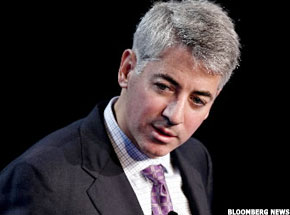
Bill Ackman, CEO of Pershing Square Capital Management
Bill Ackman, CEO of Pershing Square Capital Management.

He took a long position in General Growth Properties(GGWPQ.PK Quote) in November 2008 and then watched the stock go from 35 cents to more than $13. The company is now the subject of a bidding war between Simon Property(SPG Quote), Brookfield Asset Management(BAM Quote) and possibly Westfield and Vornado Realty Trust(VRO Quote)

He also ran a high-profile proxy contest against Target(TGT Quote) last year that failed to win him a seat on the retailer's board, although Target's shares are still still up substantially since he launched the contest.

Unlike most funds run by activist investors, Ackman's is not a long-only fund. He typically holds eight to 10 positions, with a couple of those being short. Because of that positioning, he's done well over the last few years and has remained active and outspoken.

Always a good speaker, Ackman has definitely ramped up his media appearances over the past couple of years. Pershing Square now manages more than $6 billion in assets, with a team of six investment professionals including Ackman.

Ackman describes the fund's strategy as "concentrated, fundamental, research-intensive, and long-short." The fund charges investors 1.5% in annual management fees and 20% in incentive fees.

Pershing Square has averaged 24% annualized returns since its founding in 2002. At the moment, the fund is 23% in cash.

It never uses leverage and almost never invests in industries that use a lot of leverage, are highly sensitive to interest-rate shifts or are commodity-related. (According to Ackman, the one investment that violated this rule was Borders(BGP Quote), which has lost 95% of its value since Ackman invested in it, although Ackman says at these levels it's a great value.)

Ackman wouldn't describe his firm's strategy as activist, either on the long side when he's gone to battle with Target or on the short side such as with bond insurer MBIA(MBI Quote), which Pershing Square first shorted in 2002.

......

[This post is an excerpt of the full article, which is available on TheStreet.com by clicking here. Free Site.]

Sphere: Related Content

Monday, March 01, 2010

The Activist Investor: Citigroup

By Eric Jackson

RealMoney Contributor

3/1/2010 8:15 AM EST

Click here for more stories by Eric Jackson

On Friday, Citigroup (C - commentary - Trade Now) announced a few more changes to its board of directors. Former Xerox (XRX -commentary - Trade Now) CEO Anne Mulcahy is not going to stand for re-election to the board this spring, nor is former AT&T (T -commentary - Trade Now) CEO C. Michael Armstrong. Citi had already announced in January that MIT professor John Deutch wouldn't be seeking re-election. Instead, Citi will put forward former Mexican President Ernesto Zedillo.

Citi's board has been under fire since its government bailout. After all, how could what was once (and not too long ago) the dominant global bank be reduced to such a sorry state, requiring massive government and taxpayer intervention to keep it afloat?

In spring 2008, prior to Bear Stearns'collapse, Citi's board consisted of the following members:

  • Armstrong (71), a Citi director since 1989
  • Alain Belda (66), CEO of Alcoa (AA -commentary - Trade Now), a Citi director since 1997
  • Deutch (71), a Citi director since 1996 (also 1987-93)
  • Sir Win Bischoff (68), Citi director since 2007, but Citi executive since 2000
  • Andrew Liveris (54), CEO of Dow Chemical (DOW - commentary - Trade Now) and Citi director since 2005
  • Mulcahy (56), a Citi director since 2004
  • Ken Derr (73), former CEO of Chevron (CVX - commentary - Trade Now) and Citi director since 1987
  • Roberto Hernandez (67), former CEO of Banco Nacional de Mexico and Citi director since 2001
  • Citi CEO Vikram Pandit (53)
  • Now-Chairman Richard Parsons (61), who has served on Citi's board since 1996
  • Judith Rodin (65), president of the Rockefeller Foundation
  • Robert Rubin (71)
  • Robert Ryan (66), former CFO of Medtronic (MDT - commentary - Trade Now), a Citi director since in 2007 (also a Citi executive 1975-82)
  • Franklin Thomas (75), Citi director since 1970
As of today, fewer than half (Belda, Liveris, Pandit, Parsons, Rodin and Ryan) remain on the board.

The new directors include.....

....

[This post is an excerpt of the full article, available by clicking here to go to RealMoney.com. Note: subscription required.]

Sphere: Related Content

Thursday, February 25, 2010

The Battle of the Mall Operators

By Eric Jackson


RealMoney Contributor


2/25/2010 9:30 AM EST

It's been interesting watching the emerging battle between Simon Property Group (SPG - commentary -Trade Now) and Brookfield Asset Management (BAM - commentary - Trade Now) over General Growth Properties.

General Growth filed for bankruptcy-court protection last year. Simon Property came out a week ago with an offer for the entire company, which would help it put a stranglehold on the high-end mall business in the U.S. Yesterday, however, word leaked out that Brookfield was helping General Growth to restructure and emerge from bankruptcy as two new companies. Brookfield has the upper hand in this battle, and its investors seem to like what they are hearing.

A year ago, no one wanted to be in the business of running malls. Consumers were in a bunker mentality, dimming the prospects for retailers. Traffic to malls was plummeting. The mall owners were stuck with commercial real estate that was dropping in value from its highs in 2007, and mountains of debt had to be rolled over at some point in the future.

It was this terrible macro environment, plus a coming liquidity crunch, that drove high-end mall operator General Growth into bankruptcy last April. This was a still-solvent company that couldn't roll over its debt.

....

[This post is an excerpt of the full article, available by clicking here to go to RealMoney.com. Note: subscription required.]

Sphere: Related Content

Wednesday, February 24, 2010

Goldman Needs Financially Savvy Directors

By Eric Jackson, Senior Contributor02/24/10 - 09:11 AM EST


Stock quotes in this article: GS , MT , CL , FNM , MDT , SLE

Goldman Sachs(GS Quote) had a great 2009.

The results were so good that Directorship Magazine named Lloyd Blankfein its CEO of the Year for 2009 and one of its 100 most influential voices in the board room at an awards dinner last fall. The award recognizes a CEO's achievements during the year but also a company's board for having done an exemplary job of company oversight.

Despite Goldman's many successes, its board shouldn't be held up as a role model for others, as the case of a departing Goldman director last week illustrates.

Goldman is one of the best managers of risk of any large company in the world. In a business, where the bulk of their earnings come from trading, they have successfully learned to manage risks daily.

Arguably, any company's last backstop for risk management is its board of directors. Ultimately, the buck is supposed to stop with the CEO and the executive management. The CEO gets hired and fired by the board, who agrees on key hires and sets compensation for the executive team and signs off on the company's financial statements and its internal risk management policy.

Since Enron's blowup, the concept of "board independence" has been required of all boards. If we have a majority of sufficiently independent directors in place, the thinking goes, they will be able to better monitor a CEO and a management team.

In practice, many CEOs have selected people who meet the independence standard but come from outside the industry of the company on whose board they serve. Even worse, some CEOs have chosen directors from the nonprofit world or academia, with no business experience at all.

...

[This post is an excerpt of the full article, which is available on TheStreet.com by clicking here. Free Site.]

Sphere: Related Content

Thursday, February 18, 2010

Taking the Other Side on Seabridge

By Eric Jackson


RealMoney Contributor


2/18/2010 8:59 AM EST


There are two sides to every story -- or at least there should be.

Over the weekend, Bill Alpert of Barron'sprofiled two junior gold miners: NovaGold Resources (NG - commentary - Trade Now) and Seabridge Gold (SA - commentary -Trade Now). Both are Canadian gold prospectors with $1 billion market capitalizations. Both are at development stage. As such, there are no revenues and earnings to peg valuations to. Investors have only the estimates of gold deposits to go on, and the article makes the point that these estimates are not yet a hard science.

Yet the article goes on to point out a number of potential problems with Seabridge Gold without telling the other side of the story. I hold a long position in Seabridge, so I obviously see this topic through that lens. Nevertheless, I want to rebut some of the problems of the Barron's article.

[This post is an excerpt of the full article, available by clicking here to go to RealMoney.com. Note: subscription required.]

Sphere: Related Content

Wednesday, February 17, 2010

Corporate Governance Role in Meltdown

By Eric Jackson, Senior Contributor

02/17/10 - 06:00 AM EST

Stock quotes in this article: TYC

What role did board governance play in the financial meltdown of 2008? According to John Gillespie and David Zweig, co-authors of a new book called "Money for Nothing," it was a major one.

Gillespie, a former Lehman banker, a co-founder of Salon.com, maintain that boards were asleep at the switch or simply failed to act to protect some of our largest companies to fail or inadequately protect themselves. Some 57 million American households own stock in public companies. Their interests are supposed to be protected by boards. Instead, their holdings plummeted in value, and then, as taxpayers, they were forced to bail out many of these same companies. I spoke to the authors last week, and excerpts of the interview follow.

TheStreet: What do you think of Mary Schapiro's performance as head of the SEC?

Gillespie: The expectations for her were really low. I've been pleasantly surprised. She's increased disclosure requirements, beefed up enforcement and instituted an Investor Accountability Office. She's also throwing out non-broker votes counting in favor of a vote for management starting this proxy season.

Zwieg: I've been disappointed in her delaying a decision about giving investors a right to nominate directors to boards (the proxy access rule). The longer she waits, the more investors' money is being used by companies' management and lawyers to fight shareholders' interests on this rule.

TheStreet: How do you beef up enforcement at the SEC?

Gillespie: It's really tough. A career person at the SEC makes 180K in annual salary but they have to be as good as the top person at Wachtell.

Zweig: Who else is going to do enforcement if not the SEC? The ratings firms? Accounting firms? I don't think so. We'd like to see a small transaction tax on all stock trades go toward beefing up of SEC enforcement.

[This post is an excerpt of the full article, which is available on TheStreet.com by clicking here. Free Site.]

Sphere: Related Content

Thursday, February 11, 2010

HWD: Sell the Family Jewels

By Eric Jackson
RealMoney Contributor

2/11/2010 9:55 AM EST
Click here for more stories by Eric Jackson

Harry Winston Diamonds (HWD - commentary - Trade Now) conjures up visions of the fabulously expensive jewelry stores in New York and Beverly Hills famous for draping Hollywood starlets in diamonds and pearls for the Academy Awards. But if you think the stock is a smaller version of Tiffany (TIF - commentary - Trade Now), you're way off. Harry Winston is one of the most unusual (and perhaps nonsensical) business combinations you'll find. And while the time of year might prompt you to go out and get something sparkly for your loved one, you might want to hock this particular gem.

The company is a combination of two old businesses, brought together because of a family feud. The Harry Winston retail diamond business passed into the hands of Harry's sons, Ron and Bruce, when he died in 1978. The two soon became involved in a long-running legal battle over ownership. Bruce, who'd initially shown no interest in the family trade, objected to the way Ron ran the business, not least the amount Ron started paying himself. Suits and countersuits were filed. Ron made several buyout attempts of Bruce's stake, but to no avail.

Finally, in 2000, private equity firm Fenway Partners bought out Bruce's stake in the business for $44 million. Three years later, Fenway decided to cash out and sold its stake to Aber Diamond Corp. of Canada, along with an option to buy the entire company. Aber completed the full takeover of Harry Winston in 2006 and took on the name, changing its own ticker to HWD.

[This post is an excerpt of the full article, available by clicking here to go to RealMoney.com. Note: subscription required.]

Sphere: Related Content

Wednesday, February 10, 2010

Information on the book: "Money for Nothing"

I recommend the book "Money for Nothing" by John Gillespie and David Zweig. Here is some more info on the book:


Sphere: Related Content

Corporate Governance in Sad Shape

By Eric Jackson, Senior Contributor


02/10/10 - 06:04 AM EST

Stock quotes in this article: SHAW , CCE , MHCG , WB

A new book documenting how poor the state of corporate governance is in America -- and how it was a major cause of the financial meltdown -- will make you sick.

Money for Nothing, authored by former Lehman Brothers banker John Gillespie and Salon.com founder David Zweig, lays out a compelling case for how CEOs and their minions have subverted the purpose of boards to oversee management and made them their lapdogs.

The book outlines numerous solutions to fix this problem. If they weren't so sensible, they might have a chance of being implemented.

We've now lived through two different stock market crashes in the last decade, and we learned each time in retrospect how poor a job boards did to protect the companies they served.

We thought we learned our lesson after Enron and Worldcom when Sarbanes-Oxley was implemented in part to improve corporate governance.

But, if taking your shoes off for TSA screeners is "security theater" designed to make us feel safer -- even if we're not -- Sarbanes-Oxley was the governance equivalent.

The stories of poor governance that fill the book would make you laugh, if they didn't cause you to be outraged.

Gillespie and Zweig discuss former Merrill Lynch CEO Stan O'Neal, who eliminated anyone from his board and management team who disagreed with him. Instead, he packed eight of the 10 directors with his friends, including John Finnegan, a friend of O'Neal's for 20 years who headed the Merrill compensation committee, and Alberto Cribiore, who had once tried to hire O'Neal and who was also put on the compensation committee.

[This post is an excerpt of the full article, which is available on TheStreet.com by clicking here. Free Site.]
Sphere: Related Content

Friday, February 05, 2010

Microsoft Will Make You Money


RealMoney Contributor


2/5/2010 10:45 AM EST

After releasing one of the strongest quarters in years last month, Microsoft (MSFT - commentary - Trade Now) -- like several other stocks this earnings season -- has been sold off. With Thursday's selloff, the stock was down to around $28 after getting up close to $32 three weeks ago. Yet there are numerous reasons to go long Microsoft at these levels, especially considering what's going on in the rest of the market.

Microsoft has been the Rodney Dangerfield of large-cap stocks for a while now -- it gets no respect. It's hard to believe that this stock got down to below $15 less than a year ago at the March lows. Since then, it's up 82%. For those who've owned the stock over that time, they've also received a fat dividend (currently just under 2%), which will only go up considering that the company continues to throw off cash -- Microsoft had $34 billion in cash stockpiled as of the most recent quarter.

The argument last year -- and still an argument that Microsoft bears use now -- is that this is a stock that has no growth prospects. It reported its first decline in quarterly sales year over year in the third quarter of 2009. Its online services business has continued to lose money and is still nowhere compared with Google (GOOG - commentary - Trade Now) in search.

Sphere: Related Content

Wednesday, February 03, 2010

Brooksley Born Should Be In, Geithner Should Be Out

By Eric Jackson02/03/10 - 06:00 AM EST


Stock quotes in this article: JPM , AIG , BAC

When Scott Brown won Ted Kennedy's senate seat a few weeks ago, it was a shot across the bow of President Obama from independent voters. Two days later, the president responded by announcing the "Volcker Rule" which will put more restrictions on commercial banks to get out of investing activities and focus more on lending money to their customers.

The president's response showed that he's done a poor job in his first year in office of keeping the support of "independents" -- so-called because they don't permanently define themselves as Republicans or Democrats.

The president understands that, unless he starts winning back these independents and fast, he will face a 1994-style rebuke from voters at this fall's mid-term elections. From a financial reform perspective, he must show voters that he's not a toady to Wall Street -- and I expect he will replace secretary Geithner with Brooksley Born, the former head of the Commodity Futures Trading Commission who sounded the alarm on credit default swaps long before the housing crisis swallowed the economy.


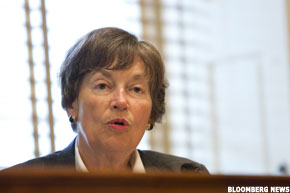
Brooksley Born
Brooksley Born, former chairwoman of the Commodities Futures Trading Commission

Why replace Geithner? Although it's now common to Monday morning quarterback the dark days of September 2008, questioning how government officials forced a shotgun marriage of Bear Stearns withJPMorgan Chase(JPM Quote), let Lehman Brothers go under, swooped in to rescue AIG(AIG Quote), and then forced through Bank of America's(BAC Quote) purchase of Merrill Lynch, the fact is -- at that time -- the financial world was careening out of control. I don't fault Geithner's crisis decisions (although they certainly were not all perfect).

[This post is an excerpt of the full article, which available on TheStreet.com by clicking here. Free Site.]

Sphere: Related Content