Showing posts with label Warren Buffett. Show all posts

Thursday, January 13, 2011

Video: BYD is Coming to America


DETROIT (TheStreet) -- Eric Jackson met with management from China's biggest car company, BYD - a big investment of Warren Buffet's. They revealed they will start selling their electric cars in the US starting in Q1 of 2012.
Thu 01/13/11 12:15 PM EST -- Eric Jackson
Stocks in this video: 1211.HK

Sphere: Related Content

Wednesday, January 12, 2011

BYD Auto Targets U.S. Debut for 2012

By Eric Jackson, Senior Contributor01/12/11 - 06:00 AM EST
Stock quotes in this article:BYD, TM, GM, TSLA, MMI, LAS

NEW YORK (TheStreet) - On Monday, I sat down with Paul Lin, a spokesman, for BYD Auto Company Ltd at the Detroit Auto Show. He revealed to me that the company is planning on coming to America in 2012. It's time for American investors to start playing closer attention to this company.

In some ways, BYD -- which stands for "Build Your Dreams" -- is the least known company that most people know Warren Buffett has invested in. The best known investor in the world discovered the company a few years ago and took a big stake.

Part of the reason why BYD still has a low profile is that the stock isn't traded over here -- only in Hong Kong under the ticker "1211." What doesn't trade here tends to be overlooked, whether it's Tencent Holdings in the China's Internet space (which has a bigger market capitalization than Baidu(BIDU_) or BYD in the auto space.

At the time of Buffett's investment, the Chinese auto market wasn't on the radar of most investors. Today, it's the biggest in the world, surpassing the U.S. last year with no signs of slowing down. Although there is enormous competition in the market, including a strong presence from Toyota(TM_), Volkswagen, andGeneral Motors(GM_), BYD is a hometown success story.

The Shenzhen-based company has decided to bring its E6 electric-powered compact to the U.S. market in the first quarter of 2012. It showed off the vehicle andseveral of the other electric-based cars in Detroit this week. The company has no specific targets on the number of vehicles they want to sell here in 2012 and 2013, but they clearly have global ambitions and aren't satisfied with simply selling their cars in China.

The company sees its biggest competition for the E6 in the U.S. coming from the Nissan Leaf. BYD believes that the E6 will have much better range (i.e., how far the car will drive when fully charged) and an attractive price. It hasn't released pricing for the U.S., but the E6 sells for between US $22,000 to U.S. $25,000 in China after government rebates have been applied.


.......

[** This post is an excerpt of the full article, which is available on TheStreet.com by clicking here. Free Site.**]

Sphere: Related Content

Friday, December 11, 2009

Rated 'R' for Resilient

By Eric Jackson
TheStreet.com Senior Contributor
12/11/2009 11:00 AM EST
Click here for more stories by Eric Jackson

When the history of the financial meltdown of 2008 is written, there will be a special chapter devoted to the large credit-ratings agencies and their culpability in slapping "AAA" on the subprime mortgages and corporate debt that turned out to be toxic assets. Yet we still don't know if that chapter will close with a regulatory overhaul of a now battered industry, or with lost political momentum that leaves us with the status quo.

For years, the Big Three ratings agencies, Moody's (MCO - commentary - Trade Now), Standard & Poor's (a unit of McGraw-Hill (MHP - commentary - Trade Now) and Fitch (a unit of French company Fimalac), had thrived on an "issuer pay" business model. The companies that brought their debt to market paid the agencies to rate the risk to investors of buying and holding those products. This business model proved far more lucrative to the ratings agencies -- Moody's and its cohorts have historically enjoyed operating margins of more than 43% -- than the one they used prior to the 1970s, when it had been the prospective investors who paid for the ratings.

They also enjoyed a regulatory advantage. The Securities and Exchange Commission certifies Moody's and other ratings firms as Nationally Recognized Statistical Ratings Organizations, an accreditation granted under strict scrutiny. Only NRSROs can rate products that certain investors are required by their internal rules to hold, which effectively gives the Big Three a steady stream of customers.

In a financial system built on investor confidence, the ratings agencies were supposed to provide the underpinning for that trust. But in the wake of last year's financial debacles, it is the agencies themselves who are struggling to explain why anyone should trust their judgment.

[This is the first third of the article. To read the entire article, click here to go to RealMoney.com]

Sphere: Related Content

Wednesday, November 25, 2009

Paulson is About Performance

Stock quotes in this article: BAC , C , SHLD

There were two reactions I got to my column last week on Greg Zuckerman's new book The Greatest Trade Ever about John Paulson's $20 billion bearish housing trade in 2007: "He was lucky" and "He won't do it again."

Even though these comments are mostly sour grapes, here's the problem with overanalyzing winners -- for the financial media, potential investors and even money managers, like Paulson himself.

Our society celebrates winners (athletes, politicians and investment managers like John Paulson) and ignores losers. From 1994-2007, in the eyes of many, Paulson was a loser. His hedge fund, Paulson & Co., had mediocre returns during this period. He was defined as a merger arbitrage guy. Because of this categorization, some investors were alarmed by his ideas about betting against the housing market using credit default swaps. Yet, he did -- and we know the results.
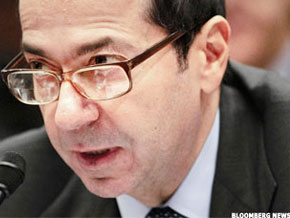
John Paulson
John Paulson, hedge fund manager

Although his pre-2007 performance didn't stand out, people who knew Paulson thought highly of him, according to Zuckerman. Investors were often impressed with his understated but effective way of clearly articulating his investment theses.

Post-2007, the perception of Paulson went from career underachiever to seer. He is now celebrated, and his recent stakes in Citigroup(C Quote), Bank of America (BAC Quote) and gold are seen as green lights to other investors to buy.

If Paulson told us tomorrow that Martians were going to invade us next month, there would be a run on Martian army gear.

Yet, this reaction is equally superficial in the opposite direction. We don't care why he thinks gold is a buy or why Bank of America will double in two years. This isn't Paulson's fault. He can't help it. It is the reality that's developed around him while he's gone about his business trying to make money for his investors. It's exactly the same as the heavy attention paid to Warren Buffett's moves.

This is classic "survivorship bias." There were 20,000 hedge funds in the halcyon days of 2007. No matter what the markets did over the next 18 months, five to 10 funds would have had scored 100%-plus returns and been celebrated. If Bernanke had cut interest rates drastically in 2006, maybe New Century would have continued to be a huge moneymaker by issuing subprime mortgages.

David Einhorn would be known today as having the canny intuition to get long that stock (and join its board) in 2006, instead of for calling Lehman's implosion in early 2008. Had the housing boom continued, perhaps Greg Zuckerman's book would be about former Bear Stearns hedge fund manager, Ralph Cioffi. Of course, this didn't happen and, instead, Cioffi is fighting civil charges by the SEC, and John Paulson is the hero.

Survivorship bias leads to celebrating the winners and -- usually -- overinterpreting their moves leading up to their success and trying to apply these actions to future situations. At least no one in the mainstream media has yet called John Paulson "the next Warren Buffett."

Remember Eddie Lampert? That's what Business Week and countless other magazines called him back in 2004. Although many still defend Lampert as smart, his past five years of performance have been very disappointing, and his Sears Holdings(SHLD Quote) investment specifically has been ... early.

Although it's easy to pick on the financial media for these flubs in hindsight, they are merely reflecting our own deep-seated human desires for making sense of a seemingly senseless market. They wouldn't tell us who'll be the next Warren Buffett, unless we wanted to buy their magazine (or click on their links) to find out. We gravitate to "winners" for pearls of wisdom to help us be more winnerlike.

This is why investors "performance chase." The best performing hedge funds (and mutual funds) will always attract the most capital. After all, performance is what it's all about. Most investors will overlook lots of quirks, ethical lapses and hard-to-follow musings about the state of the markets in investor letters, if the money manager performs.

The longer and better he or she performs, the more leash we give him or her (like Madoff) or the more we celebrate him (like Peter Lynch, Lampert and now Paulson). But past performance (and a fund's ability to raise capital) is no guarantee of future success.

Investors should judge money managers on their current ideas. If you'd done so when John Paulson made his argument for why to bet against housing in 2006 and 2007 -- despite the fact that he wasn't a "housing guy" -- you made a lot of money. His pro-gold and pro-financials views now should be also judged on their merits, not because "John Paulson thinks so." Of course, you and I will probably never have the chance to place money with Paulson. So this lesson becomes even more important. How are you going to know the next John Paulson when you bump into him or her?

Finally, let's turn to the critique of "Paulson will never do it again." Most people assume that smart people will, over time, outperform their peers. This is true. Yet, we also know smart people drove Enron, WorldCom and Lehman Brothers off cliffs -- all companies that, before their collapses, had been celebrated in the financial media with books written about them "getting it" while their competitors didn't. How can this happen and how can Paulson avoid this fate?

Michael Burry, a doctor-turned-hedge fund manager also profiled in Zuckerman's book, who also profited from betting against housing despite great protestations from his investors, had a memorable line: "A money manager does not go from being a near nobody to being nearly universally applauded to being nearly universally vilified without some effect."

Paulson's gone from obscurity to being perceived by many as the top hedge fund manager in the world. With that change, Paulson has received enormous wealth, but at a cost. His every trade gets discussed and debated in the media. He's likely become more isolated for security reasons, making it harder to relate to the "real world" in which his investments operate. And he likely has more "yes men" around him than ever before.

If you're on Paulson's team, you've made huge money recently. Unwittingly, you'll start agreeing with him more on his new investment ideas. Anyone who doesn't agree will probably leave on his own accord or be asked to leave. Those remaining on the team are the most loyal and the least likely to disagree with the boss' views. Active debate helps form great investment ideas. But, as money managers get more successful, they face less and less debate.

I disagree that John Paulson was lucky in betting against housing. From Zuckerman's account, Paulson did his homework, while everyone else stayed too long at the party. I also think that he can still conceive of and execute great trades. But there's no question that it will be more difficult now than before . Ask Lampert. Paulson's continued success is not his birthright.

Any investor choosing a money manager needs to remember the story of the emperor's new clothes. Managers like to dazzle investors with technical terms and fancy charts. However, they should be able to clearly and articulately explain their basic strategy. No amount of buzz or press clippings is an adequate substitute for clear-headedness. (In fact, if they seem overly concerned with their media appearances, this signals they care more about their image than managing your money.) You shouldn't worry about asking a stupid question. If they show a whiff of arrogance in responding to your questions, run away as fast as you can.

Answering these questions will help you skate to where the puck's going, not where it's been. It will also help you ensure differentiating between "flash in the pan" money managers from those with staying power. And, just maybe, you'll find the next John Paulson.

At the time of publication, Jackson fund held no positions in the stocks mentioned.

Eric Jackson is founder and president of Ironfire Capital and the general partner and investment manager of Ironfire Capital US Fund LP and Ironfire Capital International Fund, Ltd.

Sphere: Related Content

Wednesday, July 15, 2009

Buffett Buffet: A Pricey Meal


Salida Capital, a small Canadian fund, will pay $1.68 million (which goes to charity) to dine with the Oracle in New York. But who picks up the tab?

07/15/09 - 12:54 PM EDT

WMT , DELL , BRK-A

Eric Jackson

For months, some of the brightest financial minds in the world have been debating whether there is imminent threat of inflation thanks to the monetary easing and other programs sponsored by the Federal Reserve in response to the economic crisis.

Until now, we've yet to see rampant inflation take hold, except in one corner of the economy: How much it costs each year to take Warren Buffett of Berkshire Hathaway(BRK.A Quote) to lunch where the proceeds go to the Glide Foundation of San Francisco helping the homeless in that city.

Last week's winner, Salida Capital -- a small Toronto-based fund whose performance dropped 66.5% last year -- won the annual auction to pay $1.68 million -- or about 0.6% of its total assets currently under management -- for eight people to lunch with Buffett at the Smith & Wollensky steakhouse on Third Avenue in Manhattan in the next eight months.

The Buffett Buffet

Year Winner Winning Bid
2000: Anonymous, $25,000
2001: Anonymous, $18,000
2002: Edward Jones Co. and 2 Anonymous, $25,000
2003: David Einhorn, Greenlight Capital, $250,100
2004: Jason Choo, Singapore, $202,100
2005: Anonymous, $351,100
2006: Yongping Duan, California, $620,100
2007: Mohnish Pabrai, Guy Spier, Harina Kapoor, $650,100
2008: Zhao Danyang, China, $2,110,100
2009: Salida Capital, Canada, $1,680,300

Source: Bloomberg.com

That large tab was 20% less than what last year's winner paid, Zhao Danyang - a Chinese hedge fund manager. However, Salida's winning bid was 67x more than the $25,000 paid in 2000 by the first winner of lunch who chose to remain anonymous.

It's remarkable how rapidly and steadily the price of this lunch has gone up in the last decade:
There are a few striking things about this list:

  • As the media coverage has grown over time covering the winner, the price paid has gone up exponentially.
  • With the exception of David Einhorn winning in 2003 - when he and his fund Greenlight Capital had a much lower profile than today - and the broker Edward Jones in 2002, you've likely heard of none of the winners.
  • Until this year, a company had never won the charity auction (with the exception of Edward Jones in 2002 -- although this was split three ways -- so Edward Jones itself only spent $8,333). This year, the winner was clearly identified as the firm Salida Capital and not its individual fund managers.

If you're Buffett, what's the harm in all this? After all, it's all benefitting the Glide Foundation. Since 2000, $6 million has been raised for the charity. Buffett must find it ironic that lunch with the greatest value investor in the world is now the subject of such speculation. The only concern I would have, if I were him, was being associated with a "winner" who used the lunch for questionable purposes.

Last year's winner, Zhao, was questioned by some after he mentioned to the press that he had recommended a stock (WuMart) to Buffett during their conversation. He touted it as the Wal-Mart(WMT Quote) of China and was reported to make a $14 million profit after the stock jumped 25% based on its association with Buffett's name. Zhao denied that he had been pumping the stock.

This year's winning firm, Salida Capital, describes itself as following a top-down global macro strategy, meaning that it invests based on macroeconomic themes, rather than following a bottom-up value investing approach that Buffett is famous for.

Its president, Courtenay Wolfe, was hired about a year ago with a mandate to better market the firm and raise assets. Her background is sales and marketing, with her biggest career achievement according to her bio being launching Dell's (DELL Quote) Web-based sales effort in Canada in 1996 at the beginning of the first tech bubble.

When Wolfe was asked about the questions she planned to ask Buffett during the lunch, she said she didn't know: "We have eight months now to figure that out."

Asked about what her fund's investors thought about spending almost $2 million on the lunch, Wolfe said she believed that they thought it would make Salida's managers make wiser investment decisions -- sort of like taking a two-hour off-site training course with good food.

What's clear is that Wolfe figured out winning the Buffett lunch auction was a great way of getting the name Salida Capital in front of potential investors globally. Whether the media exposure will actually lead to more assets for the company remains to be seen. According to Canada's national newspaper, the Globe & Mail of Toronto, the company is eligible to write off the $1.7 million expense as a charitable donation.

There have been conflicting reports on whether the firm's managing directors will pay the $1.7 million themselves or whether the firm will pay. If it's the firm, Salida's existing investors are footing the bill either through their management fees or as an actual operating expense of the firm (e.g., if the firm's managers designated the cost as "research" to help make its managers better investors). I contacted Courtenay Wolfe earlier this week and asked her to clarify which of these scenarios best described how Salida would pay for the lunch. She responded that it was "personal partner capital" paying for the event.

If I were an investor in Salida, and I found out that I was even partially paying for this lunch -- even through management fees, which technically would still be "partner capital" -- I would be upset, as I would interpret the managers' actions as seeking to raise the firm's profile and its assets (not make them smarter managers -- although Wolfe argues that the "firm, funds, and therefore investors will benefit from" the lunch -- or to simply help a charity, which they admitted they didn't know before bidding).

I would see part of investment being spent with the purpose of growing the firm's assets, which will benefit the firm's managers but have no impact on the future performance of my remaining assets under management with them.

It's undeniable that the winner of these lunches will continue to get at least a day of heavy media exposure. Neither Buffett nor some regulator is going to stop that. However, as the purpose of the lunches is to benefit the Glide Foundation, Buffett should require all future winners to pay personally for winning bids and refrain from mentioning any stocks discussed during the lunch to avoid questions like these in the future.

Hedge fund investors (or the due diligence consultants they hire to examine potential managers) should also educate themselves more on just how a fund charges for its expenses. For example, are they charging a “training session at a glamorous resort with spouses” as “research” or “training” which is intended to benefit investors but appear more like boondoggles. Sometimes it’s not black or white but gray. However, if you see recurrent evidence of fund managers taking liberties in how the charge certain expenses to investors, it should be a big red flag to potential investors.

Sphere: Related Content

Thursday, May 07, 2009

Buffett's Free Pass

I was intrigued by two articles this morning reviewing the Buffett/Berkshire (BRK) shindig over the weekend by Doug Kass and David Morrow.

Both point out that Buffett gets a free pass at these get-togethers over the years (as well as from the press in general). Neither says this out of malice. They are stating fact.
Buffett himself did not conjure this reality up. He has simply done his job over the years with his colleagues at Berkshire and is living with the widespread media interest around him and the firm.

Yet if we've learned anything from the last year, it's that investors and the media need to do a much better job at being skeptical of conventional wisdom, of not being afraid to skewer a few sacred cows here and there.

I recall in 2004 the tempest in a teapot over whether Buffett should continue to serve on Coke's (KO) board of directors because he was on the audit committee who authorized their auditors at the time do some non-audit work. There were howls at the time against CalPERS and others who supported Buffett's removal from the board. The counterargument went something like: "It's Warren Buffett. How could you possibly oppose his re-election?" That's not a fair argument in my view.

I'm not suggesting a smear job of Buffett or Berkshire, or that he shouldn't have been re-elected to KO's board. I'm suggesting we not worship false idols. I'm suggesting we ask tough questions when they deserve to be asked, no matter who's being put on the spot to answer them. When there are legitimate questions to ask, investors and the press should ask them. The press shouldn't be afraid of losing their access to future interviews.

No one deserves a free pass after what we've witnessed in the last 18 months in the capital markets -- and Warren Buffett would be the first to agree.

Position: None.

Originally published in RealMoney.com on 5/4/2009 9:34 AM EDT

For real-time updates, subscribe to RealMoney.com

Sphere: Related Content

Tuesday, April 03, 2007

What Makes a Great Director


Warren Buffett's recent letter to shareholders contained the requisite number of pearls of wisdom. One particularly caught our eye: what makes a great director?

Corporate Governance has become a hot topic in the wake of scandals at Enron, WorldCom, and others in recent years. The consultants and SEC have moved in, as a result, with a predominantly "tick the box" view to concocting the "right" mix of directors on a given board. Sufficient "independence" is seen as a must by most experts.

Warren Buffett has his own criteria for what makes an excellent director. They are as follows:


  • Owner-oriented

  • Business savvy

  • Interested

  • Truly independent

Simple but powerful - classic Buffett.


I like the way that he describes the fourth characteristic as "truly" independent. Independence has become the most cliched term in this new era of governance and, because it suffers from so many different definitions, the most useless.


What makes a great director is how he or she conducts him/herself in the boardroom. Do they ask tough questions - even of the CEO who appointed him/her to the board (the one, as Ralph Whitworth says, who brought them to the dance)? Do they push for answers when they are dissatisfied with the initial response to their questions. Do they admit their ignorance in a certain area but still ask for clarification, not worried about looking bad in front of their peers?


These are all process issues. The debate in corporate governance matters has zeroed in on structural definitions. That's a shame. What I like about Buffett's list is that -- even though a list, by definition, has to focus on structural characteristics -- they lend themselves well to how a director will conduct him/herself in the boardroom behind closed doors. If you were a fly on the wall of a boardroom consisting only of directors meeting Buffett's four qualities, chances are good that there would be a real spirit of debate and constructive criticism, as well as collegiality -- the nirvana of corporate governance proponents.


In a 2-year McKinsey and Korn/Ferry study of governance I was a part of at Columbia Business School, we found, after running regressions on hundreds of governance-related characteristics as predictors of long-term increases in shareholder returns, that only one stood the test of this type of analysis: percentage of outside directors who own meaningful stock in the companies on whose boards they sat -- where they had purchased the stakes instead of receiving options/grants. This certainly creates an "owner orientation." The paper covering this study is here.


As we move into proxy season, all boards and heads of Governance Committees would do well to review Buffett's list and measure their own set of directors against it.

Sphere: Related Content