Showing posts with label Why Smart Executives Fail. Show all posts

Monday, January 02, 2012

The Seven Habits of Spectacularly Unsuccessful Executives

 If you exhibit several of these traits, now is the time to stamp them out from your repertoire.  If your boss or several senior executives at your company exhibit several of these traits, now is the time to start looking for a new job.

Read the full post on Forbes

Sphere: Related Content

Tuesday, October 11, 2011

What's Netflix Hiding?

Why it's a red flag that Netflix (NFLX) doesn't answer analyst questions directly.

Read the full post in TheStreet

Sphere: Related Content

Friday, September 30, 2011

Tuesday, January 27, 2009

Interview: Why Good CEOs Make Bad Moves

From TheStreet.com

By Eric Jackson

01/27/09 - 05:04 PM EST

YHOO , BAC

Sydney Finkelstein is the Steven Roth Professor of Management at the Tuck School at Dartmouth College. He authored the 2004 No. 1 business best-seller, Why Smart Executives Fail, based on extensive research on what causes successful companies run by smart executives to suddenly drive off a cliff in terms of performance.

The book is as relevant today as it was in the post-Enron world of Sarbanes-Oxley. Indeed, it seems we haven't learned much from that period and have set ourselves up for the current -- even more serious -- economic decline.

I've known Syd for 12 years and worked on consulting projects with him. There are few people in Corporate America today who understand what drives CEOs and Directors as well as Syd.

He's about to release his new book, which he co-authored, called Think Again: Why Good Leaders Make Bad Decisions and How to Keep It From Happening to You. It's published by Harvard Business Press and is coming out next month.

I caught up with him earlier this week to discuss the current market environment, what caused it and what we can learn from it. The following is a transcript of our discussion.

(Note: I will also be writing an upcoming RealMoney article, where Syd discusses specific investment recommendations based on his research.)

Jackson: As someone who teaches and consults with CEOs and Boards, what surprises you most about what we've lived through in the last 12 months?

Finkelstein: There are three things that stand out to me. Number one: Why are there no people protesting in the streets? I find it hard to believe that people are so passive. We've all been witness to a high-jacking of the economy by many corporate executives and boards in the name of higher profits without adequate risk-protection.

Now, our government is deciding in its wisdom to dole out potentially trillions of dollars in our money -- without clarity on if it will work. The average person is losing his job and half of his 401k. Maybe we don't understand it; maybe it's a generational thing. We should be more upset and demanding more accountability.

We did a panel discussion recently at Tuck. There was an economist talking about the bailout and why TARP made sense. There was an investment person talking about potential return on investment for taxpayers with TARP. I talked about everyday people's reactions to what was going on. The bonuses which are considered Standard Operation Procedure on Wall Street are so far removed from the man-on-the-street. There was a major disconnect that still exists and needs to be bridged.

As a professor, I've given a lot of talks in my career, but I can tell you I've never had such a strong reaction as to that talk. Staff people, students, regular people from Hanover [New Hampshire] all came up to me afterwards. It touched a nerve with them. There are real people struggling out there now and just can't relate to the fantasy world of expected bonuses and $87,000 area rugs.

The second thing that strikes me about what's going on: Where are the shareholder activists? It's been astonishing to me to watch the growth of these activists in the last 10 years (including what you were able to do at Yahoo! (YHOO Quote - Cramer on YHOO - Stock Picks) using the Web). But where is Carl Icahn now?

The sad part of the activists' success in the past few years is that our Boards of Directors are so inept that we have to rely on outsiders to correct the problems which should be solved by management and boards within their own companies.

The third thing I notice is how little the so-called experts know about what we're living through. This is concerning for someone proud of America and our economy. Nobody really knows if TARP is the right answer, or how to make banks lend, or whether we should buy up toxic assets. As you can guess, I meet a lot of smart people from business, academia and government at Dartmouth and I can tell you that nobody knows what will work. And yet we're betting hundreds of billions of dollars on this.

Jackson: Well, who's to blame? Is one group more to blame more than another.

Finkelstein: Look, none of us is innocent. From people wanting to buy a bigger house than they could afford, to mortgage brokers, to the press, regulators, and even business schools. We've all got our fingerprints on this.

But is one group more deserving of blame? Yes, the corporate boards ultimately let these companies get in way over there heads on their watch. This wasn't malfeasance. It wasn't illegal. It's just that they didn't provide any oversight. They're supposed to ask questions and not just go along. They decided it was o.k. to accept high risk and high leverage.

I don't mean CEOs get a pass for driving their businesses for big bonuses. However, our system of governance is most to blame.

Jackson: Why do smart leaders make bad decisions?

Finkelstein: The way people actually make decisions is not at all how textbooks say we do and that's what this new book is all about. We don't identify a set of alternatives and weigh them with a best expected value in their head.

Jackson: We're not "rational economic beings" like economists argue?

Finkelstein: No, and we've known that for some time now. The data just do not support that view. We have evolved to make very quick decisions to get along in life. We generally make one plan at a time at the moment. We then run with that solution.

Jackson: Sounds like TARP.

Finkelstein: It's exactly like how TARP was developed. The role of emotions is paramount to making decisions. We have emotional tags tied to each decision we make. Some tags are stronger than others. Our brain remembers the tags that are most positively or negatively charged. We look at these tags with the most emotion when making current decisions and it shapes the choices we make. All this operates at the subconscious level. These processes have been developed by our brain over time and are very useful -- most of the time.

Problems occur when we start to face situations in our current environment which don't match situations we've faced in the past. We need to be conscious of our decision-making process and not succumb to past emotional choices.

There are four red flags we talk about in the book to be on the watch for in real-time, when facing new types of problems: (1) misleading experiences when we think we've encountered a similar situation in the past but misjudge its similarities to the current situation, (2) inappropriate attachments when we are making decisions about a group or people with whom we have past ties, (3) misleading pre-judgments when our past decisions color current decisions, and (4) inappropriate self-interests when we have different personal interests than the stakeholders we represent.

Jackson: Do these red flags apply to Dick Fuld [former CEO] of Lehman Brothers?

Finkelstein: Sure. With Dick Fuld, the biggest thing he did that ended up hurting Lehman was believing he could fix the mess instead of selling the company sooner. No suitors were willing to take a chance. He'd driven down his negotiating power. John Thain [former CEO of Merrill Lynch (acquired by Bank of America (BAC Quote - Cramer on BAC - Stock Picks)] -- leaving aside his interior decorating decisions -- saw the writing on the wall sooner and sold Merrill at a premium when he could.

Fuld also fell prey to misleading experiences. During the Long-Term Capital Management (LTCM) crisis in 1998, there was global uncertainty about what would happen and Lehman and Fuld got themselves through that. He came out looking like a hero. His experience taught him that he could do it again -- and there were lots of people in the press, earlier in 2008, who agreed with him. He was over-confident. He assumed this time was similar to LTCM. But this crisis was far more severe.

Another red flag about Dick Fuld is the attachment story. He was credited with rebuilding the firm when it was spun out of Shearson in the early 90s. He thought of himself as a founder -- as if he was a Lehman. His over-attachment caused him to not want to sell. John Thain had no such attachment. He was looking to sell out at the highest price.

Jackson: Most would say President Obama is smart. He appears to have surrounded himself with talented people. He has enormous goodwill from the American public. What are the biggest lessons he should take from your work in order not to squander the opportunity he has?

Finkelstein: He appears to have the right management style with what we've found works. He delegates with appropriate oversight without micromanaging. That's a real art. He also pays attention to the importance of symbols and customs. A lot of leaders have no clue about just how important it is to pay attention to the symbolic things that people always remember. He also appears to engender real debate without getting bogged down by analysis paralysis. I think his biggest risk is that he listens too much. At end of the day, there's only one leader and he has to decide.

I would also advise him, if he asked me, to never give up the high ground on values -- the fundamental values of what you believe in. He's come to power with a lot of high hopes. Compromise is important and part of the political process, but he's got to stick to some fundamental principals.

Jackson: I was struck by what you said in the book about pattern recognition. Hedge funds have gotten their share of the blame for the current mess. Many funds built quantitative models with bright PhDs in math, computer science and physics to predict the future. When the world changed, their models were found to be worthless and resulted in billions in losses and redemptions. If you were advising a hedge fund picking up the pieces now, how do you do pattern recognition correctly?

Finkelstein: A lot of people in hedge funds attribute their success to their genius -- on the way up. You think they're doing the same now? Arrogance is an incredible warning sign for later tragedy. Every one of their quant models was based on a set of assumptions. You have to understand those assumptions and whether your model is based on limited data.

The world changed. Going forward, they have to build new models and ensure they are monitoring and updating their assumptions as they go in a dynamic fashion instead of remaining static.

Jackson: You point out the risks of an over-confident leader. Shouldn't leaders be self-confident though?

Finkelstein: No one has ever been successful without self-confidence. Of course, you need a balance. It's tough but you need to find it. You have to be confident, willing and able, but you have to stay open to alternative points of views.

But again, boards play a big role in reining in out-sized egos. There are a lot of safeguards you should be aware of that we discuss in the book: avoiding yes men and ensuring a high quality of debate in group discussions. But there's no replacement for good governance. Boards need to be much more assertive.

Jackson: How do you do that? The SEC can't mandate assertive boards?

Finkelstein: You're right. Outsiders can't make it happen. It has to come from the boards themselves who are often self-perpetuating. You and I worked on a tool for boards to use to identify early-warning signs of problems. It wasn't a very successful tool because we found that most boards don't want to hear about the problems they have. No bad news is good news. And there's an army of consultants and search companies to always come around and compliment you.

However, the evidence of the last 12 months is clear: If boards don't do a better job identifying early-warning signs, their companies will fail. I guess that's my hope, that boards become afraid enough so that they'll make the necessary changes themselves. The government cannot regulate good governance. We're talking about quality of decision-making and interaction here. You're not going to be able to put something like that in a Sarbanes-Oxley.

Jackson: How should CEOs and boards safeguard themselves against killing their companies?

Finkelstein: Do you have high-quality debate in your management team or board or are you an "imperial CEO" who has driven away anyone with a different opinion than you? Are you surrounded only by "yes men" or a bunch of weak consultants telling you what you want to hear?

Boards need to be regularly monitoring the strategy of the company against a set of predetermined yardsticks. It should be like a well-run venture-backed company: You don't get your next round of funding until you hit your metrics. Is the board regularly discussing the risks facing the company and are they working on mitigating the risks?

Finally, each director -- no matter how much they like their CEO or other members of the management team -- has to constantly remind themselves that they are the last backstop for shareholders and for other stakeholders. Don't let a stellar career go up in smoke because you didn't ask that extra question. Understand what the company does for customers, and exactly how that translates into profits and shareholder returns. That's one thing that no board member can outsource.

Jackson: Thanks, Syd.

Think Again from Harvard Business Press will be available in February.

Sphere: Related Content

Monday, December 22, 2008

TheStreet.com: Reasons Behind Yahoo!'s Four-Year Slump

From TheStreet.com

12/22/08 - 10:33 AM EST
YHOO , C , AAPL , HPQ (Cramer's Pick) , GOOG , MSFT

By Eric Jackson

The press has shown little mercy in criticizing Yahoo! (YHOO Quote - Cramer on YHOO - Stock Picks) this year. And deservedly so.
The four reasons most often cited for the Internet company's missteps over the last four years have namely been the people at the top:

(1) Terry Semel;
(2) Jerry Yang;
(3) Sue Decker;
and (4) the Board of Directors.

They all received glowing press coverage when Yahoo! was riding the general ad market recovery and shift to digital ads in 2002 to 2004. But now they are being slammed in various business media for their actions, and in some cases inactions, that have since led to stagnation and decline.

It's normal to blame organizational failures on the leaders at the top -- consider Dick Fuld at Lehman Brothers, Vikram Pandit at Citigroup (C Quote - Cramer on C - Stock Picks) or even a market-maker like Bernie Madoff. Group leaders and their choices are, in the end, responsible for group actions and outcomes.

But there are four other reasons to account for Yahoo!'s decline in the past four years: (1) A lack of product leadership; (2) self-isolated leadership; (3) a culture tolerating non-performance; and (4) the use of a matrix organizational structure.

Each of these problems traces back to choices made, consciously or not, by senior leadership. Until Yahoo! recognizes and understands these issues, the company won't be changed. This is why the choice of the company's next CEO is so important.

The right CEO will see these issues clearly from Day One and change them; the wrong CEO will be oblivious to them. Unfortunately for Yahoo! shareholders, the people selecting the next CEO will be the people on the board who've missed the four reasons for the company's recent poor performance of late.

Even though they had moved on to exciting new jobs, they expressed regret about the current state of Yahoo!, especially since they felt that they had gained a lot from their time at Yahoo!. Each person agreed that the company was fixable and that the decision about who will be named as the next CEO was critical. Most were pessimistic that the company would achieve its potential.

Here are their top four reasons for Yahoo!'s decline:

1. Lack of Product Leadership

Google (GOOG Quote - Cramer on GOOG - Stock Picks) had search. Apple (AAPL Quote - Cramer on AAPL - Stock Picks) had the Mac. Yahoo! has always had a collection of multiple products, and that has been a blessing and a curse.

It's a blessing because -- unlike AOL, which had just the dial-up business -- Yahoo! has always had multiple revenue streams that were mutually reinforcing (e.g., home page, Finance, Mail, Search). It's never been a one-trick pony.

But the multiple products are a curse because, from Yahoo!'s founding, the company has had its fingers in a lot of pies, and that has hindered it from developing a corporate focus. Through Bubble 1.0 and Bubble 2.0, the Yahoo! M&A machine was always humming to suck up venture-backed firms at healthy valuations. Integrating them cohesively was a different story and left a string of disparate businesses under the Yahoo! roof.

Several former Yahoo! employees complained about the lack of vision and the lack of product leadership from the top executives to string all the pieces together. Said one, "I always wanted to know 'what's our North Star?'" They felt that there was a lack of focus from the executive team about what Yahoo! did that created value and what it should be moving toward to better create more value.

In their views, the next CEO needs to be great at products. The core of Yahoo! is a great user experience and great products. Discussions about undertaking a search deal with Microsoft (MSFT Quote - Cramer on MSFT - Stock Picks), spinning off Asian assets, and closing the revenue-per-search gap with Google are secondary.

2. Self-Isolated Leadership

Several years ago, I worked with Dartmouth Business School Professor Sydney Finkelstein on building a consulting practice based on the research from his book Why Smart Executives Fail. He researched more than 60 one-time industry-leading companies that in the end drove off a cliff in terms of their performance.

These companies' executive team members always looked great on paper: the best business schools, the perfect career trajectory, many achievements to point to. Yet, these same people were responsible for bringing down their companies. One key reason for this -- common across all the failures -- is that the top executives got rid of or discouraged anyone around them who voiced a different perspective than theirs. This appears to have happened at Yahoo!.

According to those I spoke with, executives often didn't engage in detailed discussions with lower-level managers responsible for areas that were under-performing. "I would have liked to talk to them more," said one ex-Yahoo!. "I had one good conversation with [one Yahoo! executive] and one good one with [another executive] in [the last few years]. That's it. I know others tried to educate them on the issues. Nothing came of it."

There was not enough debate about key decisions made at Yahoo!. The last six months have seen a steady drain of senior talent. One employee contrasted that with how President-elect Barack Obama has selected key members of his Cabinet: "He's put former rivals around him in Clinton and Richardson, who definitely don't agree with him on some issues. You know they're going to speak up. You also could see any of them leading the country if necessary. We definitely don't have that depth of talent on the Yahoo! senior team."

One group that Yahoo! executives were not shy about consulting in the last four years: the consultants. "There were way too many consultants and too many planning sessions. We needed more execution," said a former employee.

3. Tolerating a Non-Performance Culture

It's obvious that every company has a unique culture. No one working there would be able to tell you step-by-step how it was created, and yet they all live and breathe it every day. The best cultures give that company an amazing advantage vs. its peers. The worst cultures hang around the company's neck and are next to impossible to shake.

"When I first started at Yahoo!, people cared. They'd challenge you if they disagreed. That changed," said one ex-employee. Another added, "Transparency about problems or mistakes used to be rewarded. Not anymore. There were some people who made mistakes and ended up getting promoted."

Over time, it appears most employees stopped pushing for the changes they wanted to see. When they tried and it fell on deaf ears, they backed down. "I think a lot of people also knew they wouldn't get similar jobs elsewhere and decided to keep quiet." The tone got set from the top, and it trickled down to permeate the organization.

4. Matrix Organizational Structure

One of the recommendations that Yahoo!'s consultants made a few years ago was to institute a so-called matrix organizational structure across the company. A matrix structure was popular about 10-15 years ago, especially in engineering-oriented companies. It seeks to overcome the complexity of a large global organization by assigning multiple bosses to employees in different geographies working on similar product or functional tasks. In other words, you report up to two or more bosses -- a product or functional boss and a geographical boss.

The intent of a matrix structure is that you understand what your local peers are working on as well as what your functional peers are working on globally. In theory, the company becomes tighter-knit, despite its size.

In practice, matrix organizational structures have greatly fallen out of favor in the last five years because they create confusion about who is responsible for certain actions. The "shared" ownership of tasks and projects across multiple groups and bosses means that it's difficult to go back and assign blame for and learn from failures. Whose throat do you choke? "It was hard to point out who specifically was responsible for mistakes because of that," said one former employee.

Thankfully, this structure has recently been done away with and products have now been centralized. Combined with the risk-averse culture described above, the legacy of this structure has been deadly for Yahoo!.

Yahoo! executives and directors aren't the first "smart" ones to fail. Otherwise, Professor Finkelstein wouldn't have a book full of stories on Enron, Worldcom and Webvan. The solutions for Yahoo! senior executives, based on the lessons in the book, are:

  • admitting when you/the company have screwed up and dissecting the underlying reasons for the failure;
  • encouraging others to admit their mistakes and learning from the mistakes instead of shooting them or encouraging them to cover up mistakes;
  • surrounding yourself with other smart people who often will disagree with you in search of the best answer for the company; and
  • demanding accountability from everyone in the company including yourself.
The right new CEO can spearhead this kind of effort for change. Mark Hurd at Hewlett-Packard (HPQ Quote - Cramer on HPQ - Stock Picks) is probably the best example of this type of turnaround. He didn't have to fire the old senior team and board. They got with the program early on and supported it further once they started to see evidence that the ship was turning.

The rest of Yahoo!'s senior team and board will have to buy into a new approach as well, admitting their own past mistakes at the same time. This assumes they pick the right person to serve as Chief Yahoo!, and that remains a big question mark.

At the time of publication, Jackson's fund had no position in YHOO. Jackson owns a small long position personally.

Eric Jackson is founder and president of Ironfire Capital and the general partner and investment manager of Ironfire Capital US Fund LP and Ironfire Capital International Fund, Ltd.

Sphere: Related Content

Tuesday, February 13, 2007

Why Smart Swedish Executives Fail


Why do smart executives fail? It's a question dealt in some detail by Dartmouth Tuck School Professor Sydney Finkelstein (who is also a business partner of mine) in "Why Smart Executives Fail."


He recently received some great coverage in a Swedish business periodical. My Swedish is a little rusty, but I know we have some readers from Sweden, so thought I would provide a link to the article.


Sphere: Related Content

Friday, January 05, 2007

Don't expect reforms in wake of Nardelli parachute

From MarketWatch:

Experts say large Home Depot packages could continue; others could follow

By Russ Britt, MarketWatch

Last Update: 2:30 PM ET Jan 3, 2007

LOS ANGELES (MarketWatch) -- If there was outrage over the $210 million severance package that departing Chief Executive Robert Nardelli was getting from Home Depot as he resigned from the home improvement giant Wednesday, it was somewhat muted.

The reason: Some corporate governance experts said that Nardelli's pay package was not entirely out of line with other companies of that size that cut ties with top managers, and there could be others like it down the road unless shareholders enact reforms.

Getting investors to take action, though, could be easier said than done.

"It's clearly an outrageous number but one that was preordained from [Nardelli's] employment contract," said Sydney Finkelstein, professor of management at Dartmouth University's Tuck School of Business. "I think it's a sign of the new rule for CEOs."

It's the risk that many companies who hire outsiders will have to take to lure executives they feel are attractive. Nardelli came to Home Depot (HD) in December 2000 from General Electric Co. (GE) , which was considered a breeding ground for top-flight management, where he was one of three top executives in line for former CEO Jack Welch's job. That post eventually went to Jeffrey Immelt.

Outsiders are concerned they may not know all the nuances of an unfamiliar company, and want some insurance should things go awry, said Finkelstein, who has studied corporate governance for 20 years and also authored "Why Smart Executives Fail."

"When things go wrong, they're able to walk away with a ransom," he said.

After six years on the job, Nardelli will get cash severance of $20 million, acceleration of unvested deferred stock awards and options valued at $84 million, vested shares worth $44 million, bonuses and long-term incentives of $9 million, 401(k) payouts of $2 million, retirement benefits of $32 million and $18 million in other entitlements if he abides by no-compete clauses over the next four years.

It is unclear how much of Nardelli's 2006 compensation will be included in the severance, if any.
Nardelli's pay package comes on the heels of a $200 million severance granted to Henry A. "Hank" McKinnell, who left as Pfizer Inc.'s (PFE) chief executive in July and then departed as chairman last month. His pay package was revealed in a regulatory filing.

It also comes after months of rancor at the company that once was a high-flier on Wall Street but has performed sluggishly on the markets ever since Nardelli took over. In the six years preceding Nardelli's arrival, the stock went from a $10 level to a peak of $70 on a split-adjusted basis, before falling to the low $40 range just as Nardelli arrived.

Since then, Home Depot shares never recaptured their earlier magic. They dropped close to $20 in 2003 and now are slightly lower than when he arrived.

Along the way, Nardelli has received what many have said are enormous pay packages that included a guaranteed annual bonus of $3 million, yet Home Depot shares are no better off than when he arrived.

It all came to a head in May, when Nardelli presided over a contentious shareholder meeting in which investors were not allowed to ask questions and board members were absent, unable to be held accountable for arranging the executive's pay.

Jerry Shields, Home Depot spokesman said the severance package for Nardelli was negotiated when he was hired on with the company. It's unclear whether Home Depot will enact meaningful reforms to keep a lid on such expenses going forward, or whether Nardelli's successor, Frank Blake, will receive a similar package.

"That's a good question, but it's still being determined," Shields said.

Paul Hodgson, senior research associate at the watchdog group The Corporate Library, doubts the company will adopt significant changes. For one, the same directors that negotiated Nardelli's package remain with the company. Also, the incoming Blake is a former GE executive.

While Nardelli's package might have been negotiated, it still came as a surprise, Hodgson said.
"It's more than I expected it to be, but the compensation levels at Home Depot have always been more than I expect them to be," Hodgson said.

The Corporate Library has given Home Depot its lowest "F" rating for more than two years in terms of good governance.

There are some corporate governance experts who say, however, that Nardelli's golden parachute could bring action. Even some government officials are expressing outrage.
U.S. Rep. Barney Frank, D-Mass., incoming chairman of the House Financial Service Committee released a statement calling for reining in executive pay. Frank also used the occasion to point out exorbitant executive pay and resistance to a raising of the minimum wage.

Patrick McGurn, executive vice president and special counsel for Institutional Shareholder Services, points out that while Pfizer's McKinnell and other chief executives who recently got a little extra gold in their parachutes, the Nardelli package may outrage more than most.
McKinnell, United Health's (UNH) William McGuire and KBHome's (KBH) Bruce Karatz all were longstanding executives by comparison. With only six years under his belt, Nardelli's per-annum severance is rivaled by only former Walt Disney Co. President Michael Ovitz, who received more than $140 million after little more than a year on the job.

"I think we're going to see a lot of reform," McGurn said. "The worst-case scenario played out at Home Depot."

Russ Britt is the Los Angeles bureau chief for MarketWatch.

Sphere: Related Content

Friday, December 15, 2006

Red Flags on the Horizon


From a recent Financial Times series on Managing Risk in the Enterprise:
Red flags on the horizon
By Sydney Finkelstein
Published: March 30 2006 18:30 Last updated: March 30 2006 18:30
Business failure has been one of the most discussed topics on the corporate landscape for the past five years. With the deflation of the “internet bubble” in 2000 and the scandals engulfing Enron, WorldCom and others, reducing the downside from uncertainty has become more important to CEOs and boards than ever before.

What can leaders and their advisers do to avoid such mishaps? Although our understanding of business failure and corporate governance has improved over the past five years, in truth most organisations’ concept of managing uncertainty is limited to implementing new financial controls, protecting information technology and preparing for disaster recovery. We are still in our infancy when it comes to understanding uncertainty that arises from leadership, strategy and the internal workings of organisations. Yet what is more important to a company’s survival?
If there is one thing all senior executives and board members agree on, it is that a major breakdown or failure should not happen on their watch. When you get right down to it, there are dozens, even hundreds, of decisions that are made in companies that keep the ship moving forward, and no senior group or board can possibly control them all. But if these decisions (and sometimes non-decisions) push an organisation to the precipice of failure, the senior group and board will be held responsible. This was certainly the case in many of the big business breakdowns of the 1990s. Companies such as Tyco, Rite Aid and Ford saw a revolving door at the top, and when things go wrong in such a public way, personal reputations often fall by the wayside as well.
The solution, I believe, is to develop an early warning system that can identify – in real time and not after the fact – the vulnerabilities that can lead to a company’s failure. Armed with this information, leaders are in a position to make the necessary real-time adjustments before it is too late. The purpose of this article is to describe what an early warning system is, what it can do for you and how it can work in your organisation.
A new way to measure uncertainty
The Sarbanes-Oxley Act and similar types of legislation designed to increase transparency and reduce uncertainty in organisations have turned out to be remarkably controversial. Not only are reporting requirements onerous, there is also a danger that senior executives, boards and investors will be lulled into believing that the major vulnerabilities confronting a company are “under control”. In truth, what Sarbanes-Oxley does not do, and what is of primary importance for senior leaders and boards, is to identify the real vulnerabilities they face. Companies today do not have effective models or hands-on tools to assess their vulnerability to major breakdowns. To do so requires direct attention to what our research has identified to be the major drivers of long-term success and failure: the leadership, strategy and organisational processes at the heart of the business.
A further complication is that organisational problems of this nature are not often apparent, even to top leaders. How often do insiders take the time to check where they stand on these seemingly fuzzy topics? In speeches to senior executives and boards, I often ask participants to tell me about their early warning system for identifying failures. The most common refrain: “We look to our quarterly returns.” The problem is that by the time financial reports provide evidence of a breakdown, it is usually too late.
I have spent the past eight years conducting research with companies in North America, Europe and Asia to try to understand the underlying causes of business failure. Much of this research came together in our book Why Smart Executives Fail.
Since then, I have extended our research to identify the early warning signs for business failure – the key factors that differentiate high-performing companies that stay successful from those that are successful for a while and later falter. The result is a sophisticated yet easy-to-use diagnostic tool that I call the SMART Early-Warning System.
Our research shows that most successful organisations fail because they either focus on the wrong information in the heat of battle – or ignore it altogether. In contrast, smart organisations equip themselves with a corporate early warning system that ensures that “lost signals” vital to long-term success are identified and monitored consistently.
The most enduring and successful organisations, like well-prepared battalion units, have a system that constantly scans the environment for relevant information. This serves as benchmarks on which senior executives can assess their potential vulnerabilities to business disaster. And it provides time-sensitive, critical information on the barriers that prevent them from fully executing their vision and strategy.
There are three pillars at the heart of the system:
■ SMART Leadership Do you have the right knowledge, attitudes and behaviours among your executives and directors? Do you possess the best team, board structure and processes to optimise debate and engage in rigorous analysis? Do you have the depth of talent to ensure future succession needs?
■ SMART Strategy Have you examined the underlying assumptions on which your strategy is based and are they still accurate in the light of recent technological innovations or competitive pressures? Are key stakeholders aligned with the strategy or are there “blockers” present?
■ SMART Process Is there a clear organisational structure and process in place? Does information from the far reaches of the organisation get to the board or management team in a reasonably unfiltered fashion so that action can be taken in a timely manner? Do your culture and employee commitment support the implementation of the strategy?
The SMART Early-Warning System takes these essential questions and converts them into a validated process for accurately measuring where a company stands and what its vulnerabilities are in each area. Our research has found, for example, that the most critical attributes of leaders in organisations that continue to thrive when compared with their peers in failing organisations are:
■ The degree of open-mindedness to new ideas, criticism and different perspectives
■ The extent to which a bias towards personal accountability takes hold among each individual leader
■ The degree of energy directed toward learning new management practices and competitive moves alike
These leadership attributes are critical. For example, while the Rudman report that investigated the collapse of the US mortgage lender Fannie Mae did not blame former CEO Frank Raines for the accounting fiasco, it did describe “an attitude of arrogance”, “an absence of teamwork” and “a culture that discouraged dissenting views”. You can’t get much farther away from the ideal than that! Coupled with some of the other key warning signs, these types of attitudes and behaviours are among the strongest indicators that trouble is coming.
With respect to strategy, I have found that the major difference between success and failure boils down to strategic alignment and analysis of underlying strategic assumptions. Take the latter. How often do senior leaders, or the board of directors for that matter, take the time to identify the underlying assumptions that form the core of a company’s strategy? Time and again, I have found that critical assumptions were outdated, outmoded or just plain wrong.
Business history is replete with examples. For example, Motorola experienced a meltdown in market share from 60 per cent to less than 20 per cent because senior managers wrongly assumed that customers preferred analogue phones despite the rise of digital. Only now, almost ten years later, is the company recovering under new leadership.
The SMART Early-Warning System assesses the extent to which the most common assumptions that lead to failure are still in place. By identifying the strategic vulnerabilities in a company that result from these inappropriate or incorrect assumptions and doing so in real time, executives can take corrective measures before the costs of failure set in.
Conclusion
There is no way to guarantee an end to business breakdowns. However, senior executives and boards can do much more to reduce the odds that they will happen. Traditional risk assessments are essential weapons for companies to use, but they are not designed to grasp the core elements of a company – its leadership, strategy and processes. Based on years of research, I can offer a different type of diagnostic tool specifically designed to identify an organisation’s vulnerability to breakdowns. The SMART Early-Warning System is all about uncovering the red flags that are not instantly visible.
The logic behind an early-warning system is compelling. It is a form of insurance. Without regularly monitoring the signals that come from an early warning system, companies are actually increasing their vulnerabilities, something that no senior executive group or board of directors should let happen on their watch.
___
For more information on a SMART Early-Warning System, please visit the following link.

Sphere: Related Content

Thursday, December 14, 2006

Building Smart Leadership

By Sydney Finkelstein & Eric Jackson

Introduction

At the beginning of 2005, Morgan Stanley Lead Director, Miles Marsh, thought that the performance of the white shoe investment bank was on-track. "Performance had turned up," he said, as earnings per share rose 18% in 2004 and the firm was #1 in stock underwriting.i He and his fellow directors would no doubt have been surprised to learn that, just 6 months later, Chief Executive Philip Purcell would be ignominiously forced to resign his post after an unprecedented number of complaints from employees, ex-employees, and shareholders, putting a cloud over the entire board.

It turned out that - despite several positive financial indicators - there were many warning signs that Morgan Stanley was headed for trouble. These signs went unheeded. The public and private battles, high-level executive turnover, and demoralized culture were not inevitable; it was through lack of attention that they became so.

In our research we have found that Morgan Stanley is not the first - nor likely will it be the last - highly successful organization that sowed the seeds of its own demise. Based on six years of research that went into the writing of the 2003 book "Why Smart Executives Fail", as well as more recent research, we have identified the key organizational patterns that differentiate between high-performance organizations (like Morgan Stanley) that later fail in large part because of their success (what we call "Not-so-Smart Organizations") and other successful companies that have been able to maintain and grow their market dominance. We call the latter, "SMART Organizations," and, in this article, we outline the key factors that can help you determine whether or not you are building a software organization with "SMART Leadership."

The "SMART Organization" Defined

We have all seen successful software organizations that have their day in the sun. Earnings are up, maybe there's a hot new space that's attracting a lot of VC money, or there's a category-killer technology that is generating a lot of buzz. The CEOs in these organizations are typically splashed across the covers of major business magazines, and are given ample opportunities to outline in Inc., Red Herring, Fast Company, and CNET the reasons why they have been successful. Alas, in many of these situations, the excitement does not endure. A couple of missed quarters. New competitors emerge with an even more interesting gizmo. Larry Ellison said famously that over two-thirds of software companies will be out of business or consolidated within the next 5 years. Where is the Second Act for these organizations?

For other one-time successful organizations, their Second Act is more of a slow bleed. They don't immediately head into bankruptcy. Rather these one-time giants quietly fade into market irrelevance or cannot raise further venture money and, instead, pull in their horns while they try to outlast their competitors, ceding market share and often profitability. Some of these firms are able to shake off the rust (look at Motorola's comeback under Ed Zander's leadership), while others must accept being acquired by competitors they used to rival in prestige and profits (think of Siebel's acquisition by Oracle). We call these organizations that struggle to maintain their market pre-eminence "Not-so-Smart Organizations," as their failures are almost always within their control. "Why Smart Executives Fail", outlines these major causes of corporate failure.

However, in our research leading up to and since the publication of the book, we noticed that there appeared to be other successful organizations (in software and other industries) that were able to keep churning out steady and consistent growth, quarter after quarter and year after year. Why? As we began to look closer at what was going on in these two types of organizations at the board level, at the top management team level, and across the entire organization, we noticed some compelling differences. For example, while the "Not-so-Smart Organizations" seemed almost consumed by their financial performance to the exclusion of other organizational factors (Founder and CEO An Wang of Wang Labs, used to carry a note card displaying Wang Labs' stock performance versus IBM's), other organizations not only paid close attention to their own financial indicators, they were also carefully attuned to several organizational factors as well. Because these organizations all maintained and grew their market dominance, we refer to them as "Smart Organizations."

Again and again, the same kinds of organizational factors appeared across these firms. They cluster into three groups, so we call them the Three Pillars of a "Smart Organization:" Smart Leadership, Smart Strategy, and Smart Process. Examples of "Smart Organizations" in our study included Google under Eric Schmidt, Sergey Brin and Larry Page, Dell under Michael Dell and now Kevin Rollins, Four Seasons Hotels & Resorts under Isadore Sharp, Gucci Group under new head Robert Polet, and the world's largest retailer Wal-Mart Stores under Lee Scott. According to our research, it's only through paying attention to each of these "Three Pillars" that an organization can help ensure that it will continue to execute the necessary high-performance financial indicators that all boards, top management team, investors, and analysts want to see. In the remainder of this article, we describe the role of the first of these pillars: Smart Leadership.

The Three Pillars of a "Smart Organization"

Smart Leadership

The first commonality we found across Smart Organizations was that they possessed "Smart Leadership" at the Executive Team and Board levels. The "smart" label doesn't reflect their collective IQ (although all would have scored highly). Instead, what made their teams and boards "smart" was a combination of certain individual skill-sets that each officer and director possessed, none of these organizations had "Imperial CEOs" with thousands of faceless followers. Instead, they had teams, boards, and leaders throughout the organization who were the stars of the show. These officers and directors had skill-sets, knowledge, attitudes and behaviors that were in place in "Smart Organizations" but were conspicuously absent in successful companies who later headed towards failure.

Skill-set #1: Breeding "Proactive Paranoia"

Several years ago, Andy Grove popularized the notion that "only the paranoid survive." While this phrase is now almost a Business School cliché, it is truly an embedded value we found in our sample of "Smart Organizations." Executives and directors from these firms believed that their market leadership was truly only a quarter away from slipping from their grasp. They maintained a healthy respect for all their competitors and never got too caught up in their success. Wal-Mart execs religiously track Target's and other retailers' moves, often visiting their stores at least once a month.

By contrast, "Not-so-Smart Organizations" cavalierly disregarded the potential threat of competitors. Instead, they saw their market leadership as permanent and, perhaps because of this, often began spending lavishly on themselves and their corporate offices. Wal-Mart still requires all of its senior executives to share hotel rooms on corporate trips. And, if you have been to their Bentonville Home Office, you know that they don't waste an inch of space, stuffing cubicles together as tightly as they stuff product on Wal-Mart floor space. Sam Walton would be proud.

Skill-set #2: "We Work for the Shareholders/Investors" Mentality

None of the "Smart Organization" officers and directors we studied breathed a whiff of entitlement - even when they founded the company. They didn't believe the company owed them anything. They saw it as a privilege to work for the organization and felt a deep responsibility to the shareholders (or investors in the case of pre-IPO firms). They were very circumspect in spending company resources. To see an example of this type of attitude in action, read the Founders' letter to shareholders contained within Google's IPO filing with the SEC (ridiculed at the time for sounding too idealistic with its founders stating the ethos of the company was "don't be evil").ii Even after a successful secondary offering raising hundreds of millions of dollars, Google's founders purchased a used Qantas Boeing plane for their corporate travels (and did so personally), rather than a fleet of smaller more expensive planes.iii

By contrast, executives at "Not-so-Smart Organizations" often blurred the lines between their personal interests and the corporate interests. Robert J. O'Connell, CEO of MassMutual Financial Group, was recently dismissed after the board learned that the top female executive with whom he had had an office affair had overseen a $30M padding of his supplemental retirement account and bought a Florida condominium from the company at a discounted price.iv

Skill-set #3: The Executive Team and Board have the Answers, not just the CEO

Instead of providing all the answers, CEOs at "Smart Organizations" consult frequently with members of their team and board. This is not to say that the CEOs still do not play a lead role in charting strategy. However, each officer and director is comfortable speaking up and challenging the CEO's opinion. And, as important, the CEO knows that he/she doesn't have all the answers.

Michael Dell puts it this way: "to assume that a CEO knows every single thing about every aspect of a company… I mean you take a guy like Jeff Immelt, Jeff's a great guy, a really smart guy. Can he know every single thing about all aspects of GE's business? Sorry. It ain't gonna happen. So, I think you got to have a system of processes and controls, and it's his responsibility, just as it is mine, to sit down with the teams on a regular basis and understand. 'Well, let's talk about your business, what are you doing, what's the control environment?' We rely on our teams to give us assurances."v Together, the brainstorming and debate leads to better decisions. In "Not-so-Smart Organizations," you are much more likely to find the prototypical "Imperial CEO" providing the answers and believing they are absolutely right.

Skill-set #4: Preventing Groupthink

"Smart Organizations" are never cults, where people are too afraid to speak up. You never hear the phrase, "you're either with us or against us." And, you certainly do not find key dissenters forced out of the organization. "Smart Organizations" prevent "groupthink" from setting in at the Top Team or Board levels. Michael Dell is famous for asking at meetings, "What could go wrong? What are we not thinking of?" In "Not-so-Smart Organizations," CEOs "take out" those who are not being supportive. In the case of Philip Purcell at Morgan Stanley, he simply eliminated the jobs of two key Morgan executives (Vikram Pandit and John Havens) who he didn't see as onside with him when outsiders started to complain about Purcell's performance.vi

Skill-set #5: Projecting Authentic Leadership

We found that leaders at "Smart Organizations" weren't particularly fussed about how they or their organizations came across to others. It was much more important that they were clear on their own set of values and what their organizations stood for. Whether others "got that" or not was inconsequential to them. As a result, they came across as authentic. Examples include Mark Hurd at HP, Sam Walton at Wal-Mart, and Brian Roberts at Comcast. "Not-so-Smart Organizations'" leaders were very conscious of their and their organizations' image in the media. Great time, energy, and resources were spent crafting just the right media image. In some cases (think Carly Fiorina), the effort probably ended up doing more harm than good.

Skill-set #6: Facing Reality

The officers and directors from "Smart Organizations" had no trouble seeing themselves and their organizations for what they were at that moment. Even if they were already #1 in their market, they knew their weaknesses, as well as their competitors' key strengths.

An example of wanting to stay ahead of the curve is Robert Polet, new Chief Executive at Gucci Group. He recently took the unprecedented step of applying standard business practices (such as focus groups, hiring outside consultants, and using industry benchmarks to increase the rate of inventory turnover in their stores) to the formerly highly cloistered organization that structured itself around the single vision of its former creative head, Tom Ford. And, although some longtime employees reacted to Polet's 'facing reality' tools "as if he'd used foul language," Gucci Group's sales are up 13% in the last quarter.vii By contrast, leaders at "Not-so-Smart Organizations" saw themselves as dominating their environments. One emerging leader who feared his organization had an over-inflated sense of how dominant they were in their market expressed his concerns this way, "we are a kitten, who looks in the mirror and sees a lion."

Skill-set #7: Desire to Learn from Mistakes

Most organizations (and people) typically have a hard time admitting they have made mistakes. In fact, psychologists have demonstrated how cognitive biases often push people to persist in supporting bad decisions - even when we know logically that they do not make sense (throwing good money after bad). That's why most organizations' executives and directors don't want to hear about organizational mistakes. They want to hear success stories and see the financial indicators heading in the right direction.viii

Sometimes, admitting a mistake is tantamount to an executive wearing the Scarlet Letter in front of the group. Yet, "Smart Organizations" don't run from mistakes; they embrace them. They understand that their future competitive advantage lies in their accurately understanding why a current venture or division or product has failed. And then taking corrective actions. In the case of Wal-Mart, although they were highly successful in the United States, some of their initial international forays were not as successful. Their mistake? Applying the US store model, exactly as is, to these new markets. Their push into Argentina was especially painful. Yet, they learned from this experience in time to prepare for entering China, where Wal-Mart offers such local delicacies as barbecued pigeons, live frogs, and snakes of purported higher quality than that available outside the store at the local street market.

Skill-set #8: Personal Accountability

Beyond the skill-sets listed above, there was one more, which was found in spades among officers and directors in the "Smart Organizations" we examined: Personal Accountability. These men and women took their roles and responsibilities very seriously. They did not accept simple answers to complex questions. They would push to further understand an organizational breakdown, or question an already successful process or division.

Isadore Sharp, Chairman & CEO of Four Seasons Hotels and Resorts, has been responsible for driving this aspect of the firm's culture within its executives and employees for the last 35 years. One concept that epitomizes personal accountability has been etched into the culture as "The Golden Rule." Interviewed for this article, he explained the importance of this skill-set, and how it filters up to the Four Seasons' officers and directors: "The Golden Rule' is at the heart of our operating principles, and is part of every aspect of our business. Hotel staff is empowered to serve guests by making instant decisions, guided by the idea that one should treat others as one would be treated. Executives are similarly empowered, and with empowerment comes responsibility. In that way, we are all personally accountable for our role in the company's success."

Conclusion

To have Smart Leadership in your software organization - and take the first steps towards building a "Smart Organization" - you must first understand its components, which we have outlined in this article. The 8 key skill-sets must be assessed on a regular basis to make sure that leadership retains its vitality and open-mindedness that characterizes smart organizations and is so often the downfall of the not-so-smart organizations. It is only through careful attention to an early warning system that smart leaders and smart organizations can remain smart. And it is precisely this early warning system that is at the heart of early prevention for companies that wish to avoid mistakes and breakdowns.

i Davis, Ann, & Smith, Randall. 2005. "Delayed Reaction: At Morgan Stanley, Board Slowly Faced Its Purcell Problem." Wall Street Journal: August 5, A1.

ii To review the Founders' letter contained within Google's IPO filing, go to: http://www.sec.gov/Archives/edgar/data/1288776/000119312504073639/ds1.htm#toc16167_1

iii Delaney, Kevin J., Lunnsford, J. Lynn, & Maremount, Mark. 2005. "Wide-flying moguls: Google Duo's new jet is a Boeing 767-200." Wall Street Journal: November 4, A1.

iv Bandler, James, & Lublin, Joann S. 2005. "Executive Privilege: Inside MassMutual Scandal, An Angry Wife Sparked Probes." Wall Street Journal: August 19, A1.

v From interview at: http://www.mccombs.utexas.edu/news/pressreleases/corp_gov_dell.asp

vi Ward, Vicky. 2005. "Betting the Bank." Vanity Fair: September, 348 - 390.

vii Galloni, Alessandra. 2005. "Inside Out: At Gucci, Mr. Polet's New Design upends rules for High Fashion." Wall Street Journal: August 9: A1.

viii For more information on how Wal-Mart learned to expand internationally, see: http://www.stern.nyu.edu/Sternbusiness/spring_summer_2003/bigstore.html

ix From Davis & Smith, op. cit., and Ward, op. cit.

Sphere: Related Content

Fannie Mae Report Is Long, but It's Not the Whole Story

The Fannie Mae Report of last spring shone a light into the systemic difficulties which brought down one of the most powerful organizations in the US. In this Washington Post Article by Steven Pearlstein, he notes that the report could have been titled "Why Smart Executives Fail" the best-seller by Dartmouth Professor and Jackson Leadership Consultant Sydney Finkelstein. Here's the article in full.

By Steven Pearlstein

Washington Post

Friday, March 3, 2006; Page D01

It took 17 months to prepare, cost more than $60 million in professional fees and runs 2,652 pages. And yet, as the definitive word on what went wrong at Fannie Mae, the report submitted by former senator Warren Rudman and his colleagues at Paul, Weiss, Rifkind, Wharton and Garrison is surprisingly unsatisfying. You get the whos, whats, wheres and whens. But it's annoyingly short of the whys.

That's not Rudman's fault exactly. As he explained yesterday, he and his crew took a lawyerly approach, laying out what they found out from hundreds of interviews and millions of documents, and the logical conclusions that could be drawn from them.

What you don't get, however, is much of the context in which it all occurred -- the frenzy on Wall Street, the ridiculous escalation in executive pay, the widespread deterioration of accounting standards, the relentless political assault against the company by its competitors and ideological foes.

And even after wading through hundreds of pages, you still can't figure out why so many smart, hardworking and basically decent people could get it so wrong.

Too many trees, too little forest.

The basic story line of the Rudman report is that Fannie's chief financial officer, Tim Howard, and a few of his loyal lieutenants cleverly and systematically twisted accounting rules in an effort to smooth earnings and meet bonus targets. For a while, they were able to hide it all from the chief executives and a vigilant board of directors while convincing outside auditors and lawyers that, even if they were wrong about a few things, it didn't amount to a hill of beans.
When the truth finally emerged, however, Fannie's directors moved aggressively to clean house and put new policies in place.

That, of course, just happens to be the story Fannie would want to put before a jury if, for example, it were to be sued by the Securities and Exchange Commission or by unhappy shareholders. Call me cynical, but I somehow doubt that's the whole story.

For me, the most telling chapter comes near the end of the Rudman report. Freddie Mac has already been brought low by an accounting scandal, prompting federal regulators to order a thorough review of the books at its fraternal twin, Fannie Mae. Fannie directors have hired the blue-chip law firm Wilmer Cutler to ensure full cooperation with the regulators and conduct their own "substantive review" of Fannie's accounting policies. Wilmer, in turn, has hired a second audit firm, Ernst and Young, to bring fresh eyes to the accounting issues and the work of Fannie's longtime auditor, KPMG. At a crucial meeting in July 2004, Fannie's board gathers to hear the "second opinion" from its expensive new experts.

As directors and top executives remember it, Wilmer Cutler and E and Y essentially gave Fannie a clean bill of health. No evidence of earnings management. Full compliance with generally accepted accounting principles. Total cooperation with the federal probe. It was not surprising, then, that directors went away relieved and reassured.

But the reality, Rudman concluded, may have been quite different.

Unbeknownst to the board, for example, regulators were furious over the resistance they encountered from Fannie Mae and its outside lawyers against producing all the documents that had been requested. Rudman's associates found several key documents that were withheld from regulators based on what he concluded was a pugnaciously narrow reading by Wilmer attorneys of the original request.

In addition, E and Y would later tell Rudman that it had never been asked by Wilmer Cutler to give a "second opinion" about Fannie's accounting policies, agreeing only to a more limited role. Moreover, E and Y now claims that its accountants never concluded that Fannie's accounting policies were justifiable and reasonable but in fact had raised several red flags that might lead regulators to demand a restatement.

Now I don't know about you, but I suspect there's a wee bit of fanny-covering going on here.
Let's start with the directors. If, after Enron and WorldCom, any director who actually believed that there had been no earnings management at Fannie Mae -- or any other major company, for that matter -- ought to immediately check into the Betty Ford Gullibility Clinic. And it would have taken only a five-minute call to the Office of Federal Housing Enterprise Oversight for a vigilant director to determine how little cooperation regulators were getting from Fannie's legal pit bulls.

At the same time, if E and Y and Wilmer Cutler had raised concerns about Fannie's accounting policies, I doubt they would have sat by silently in 2004 and 2005 as Fannie officials repeatedly invoked their good names in fending off criticism. In fact, they gave the answer they thought management and the board wanted to hear, collected their fees and are now scrambling to defend their reputations.

As I was reading through that and other chapters of the Rudman report, I had a nagging feeling that I had read the story before. And then I realized where: in a management book about blowups of other once-successful corporations, written by Sydney Finkelstein, a professor at Dartmouth's Tuck School of Business.

Finkelstein's insight is that big corporate mistakes aren't caused by stupidity, or venality, or by an unexpected bit of bad luck. Nor are they the result of flawed strategy or inability to execute, although those may sometimes appear to be the cause.

Rather, Finkelstein says, the most spectacular corporate failures occur in companies that are so blinded by their own competence and past success that they instinctively tune out legitimate outside criticism. Inside, a positive can-do culture tends to snuff out criticism, dissent or negative feedback. Executives at these companies tend to be obsessed with the company's image, underestimate major obstacles, assume they have all the answers and stubbornly rely on what worked for them before.

The reasons behind most corporate collapses, according to Finkelstein, entail the deep-seated psychological need people have at all levels of a company to belong and get along, to rationalize what has already been done or decided, and to put off loss or failure.

"From what I know about Fannie Mae, it certainly fits the pattern," Finkelstein told me yesterday.

So if you want to know how Fannie Mae misstated its earnings and ran itself off the rails, Warren Rudman's 2,652-page report is probably as good a guide as you're going to get. If you want to know why it happened, save yourself some time by reading Sydney Finkelstein's 290-page "Why Smart Executives Fail."

Steven Pearlstein can be reached at pearlsteins@washpost.com.

Sphere: Related Content

Thursday, December 07, 2006

What Leadership Means and What Makes a Good Leader? Podcast from the CIPD in the UK

The Chartered Institute of Personnel and Development has been a leading light on HR issues in the UK for a number of years. In this podcast, they tackle the difficult questions of "what leadership means" and "how you find the leaders you need?"

In it, they interview Jackson Leadership Special Consultant and Dartmouth Tuck School Professor Sydney Finkelstein.

To listen to the podcast, go here.

Sphere: Related Content

When Leaders Steer Companies into The Abyss

From Today's Times of India, about Jackson Leadership Special Consultant Sydney Finkelstein's work:


When leaders steer their cos right into an abyss

NEELIMA MAHAJAN

The Times of India

DECEMBER 07, 2006

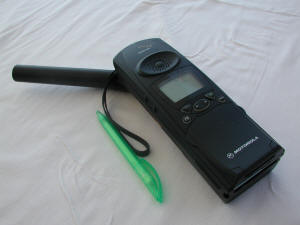
Remember Motorola's Iridium satellite phones? They allowed subscribers to make calls from virtually any global location, thanks to a set of low-Earth-orbiting satellites. It was a $5-billion project that was meant to revolutionise the mobile phone industry. After a high-decibel launch in November 1998, Iridium tanked. In 1999 the company filed for Chapter 11 bankruptcy.

Popular perception suggests that Iridium nosedived because terrestrial cellular telephony spread across the world faster than anticipated. But Sydney Finkelstein, professor at Tuck School of Business, disagrees. "The Iridium story is a brilliant example of executive mindset failure," he says. "They got the strategy wrong believing they had it all figured out.

They didn't have a good sense of market changes." In the 11 years it took to bring it to market, cellular telephony spread across the globe, dramatically shrinking Iridium's target market of "executives who regularly travelled to areas not covered by terrestrial cellular" .

Two, even while the product was being developed , likely problems in design , operations and cost came to light. Motorola executives knew all this but went ahead with the initial plan. Partly because Motorola's owners saw Iridium as a sign of the company's technological might and it was a matter of pride for them.

Besides CEO Edward Staiano believed that leaders need to take ownership of their projects. So despite a bad business plan and an increasingly obsolete technology, Staiano went ahead fullsteam.

Others have blundered too--like Wang Labs, Cabletron, Xerox,... Finkelstein was prompted to fstudy the causes behind them. "There is so much literature on success already. Whereas we can learn so much from failure and bad practices ," he says. After six years of research, Finkelstein wrote Why Smart Executives Fail in 2003."

A lot of corporate failures are attributed to changes in technology, competitors and consumers. If you delve deep, you'll figure that the real reason is failed leadership."

But why do leaders develop these blindspots? One reason is 'executive mindset failure', like in Motorola's case. The second mistake is nursing delusions of being a dream company. Take Wang Labs, one-time technology powerhouse and inventor of the Word Processor.

It had sales of $3 billion whereas IBM was at $47 billion. After the Word Processor's success, founder An Wang started believing that IBM's doom was near. "He carried a little chart in his pocket which showed how one day, Wang would surpass IBM. He would often flash that out," says Finkelstein . When his son said that IBM's personal computer could be a threat to the Word Processor, Senior Wang remarked: "The PC is the stupidest thing I have ever heard of." "Eventually Wang Labs got wiped out," says Finkelstein.

Then there are other organisational issues like the breakdown of communication . Xerox's Palo Alto Research Centre invented the ethernet, the computer mouse, the graphical user interface that Apple's Mac adopted and the laser printer. Out of these innovations Xerox commercialised only one: the laser printer. "Because the core of the business understood what that was and what they could do with it," says Finkelstein. But information on the other inventions never reached the right people who could have used it within Xerox.

Reason No 3 is what Finkelstein calls "leadership pathologies" (See 'Blunder Bosses' ). "Cabletron was once equivalent to the size and profitability of Cisco. But over 10 years, it fell apart," says Finkelstein. Part of the reason was CEO Bob Levine, who believed that rivals like Cisco were producing inferior products, so they didn't need to worry about them. And that if the customers couldn't see that, Cabletron's salespeople would make them see it.

There are some simple thumbrules to help CEOs guard against these mistakes. "When embarking upon a new project , finance it the way a venture capitalist does," says Finkelstein . So you get some funding, achieve a few milestones, and then get more funding. So you don't pump a $5-billion investment into Iridium at a time when the environment is changing.

Two, one needs to be wary of situations when a project becomes a personal goal--you feel the need to take it through, come what may. "CEOs need to check this tendency," says Finkelstein. Senior executives should ask tough questions. "At Dell it is a standard practice to ask questions like: what may go wrong here, are we thinking of this the wrong way, what could a rival do to disrupt what we are doing. There is a lot of scenario planning in companies that think this way."

Every company needs to evolve "early warning systems" -- or ways to identify potential vulnerabilities Most CEOs rely on quarterly results for this. But by the time the quarterly results come, it is too late. "It's like saying well, once cancer is in your body, we know we have cancer and you are much better off preventing it," says Finkelstein. Instead companies should watch out for danger signals like unnecessary complexity in procedures and solutions; growing too fast too soon; senior executive quitting en masse; and excessive hype around yet-to-be-introduced products. Sounds familiar?

BLUNDER BOSSES

Seven habits of Spectacularly Unsuccessful People:

* They see themselves and their companies as dominating their environments
* There is no boundary between their personal interests and that of their corporation
* They think they have all the answers
* They eliminate anyone who isn't 100% behind them
* They are consummate company spokespersons, obsessed with the company's image
* They underestimate major obstacles
* They rely on what worked for them in the past

Sphere: Related Content