REDMOND, Wash. (TheStreet) -- Last week's news of a search partnership between Microsoft(MSFT Quote) and Yahoo!(YHOO Quote) means that Yahoo! is leaving the search business and handing the keys over to its rival and former suitor.
The market sent Microsoft's shares higher and dropped Yahoo!'s like a stone. Since the announcement, 15% of the Web portal's market capitalization had been shaved off. After a lot of tough talk from the new CEO in her first six months, Carol Bartz has laid her first egg with investors. She didn't manage expectations properly. But it's Yahoo!'s longtime directors who deserve the most blame for this most recent Yahoo! stumble. They should leave immediately.
After years of abuse, Yahoo! investors took heart when Bartz was named to replace Jerry Yang as CEO in January. From the moment she arrived, her cussing and put-downs of her predecessors earned her points on Wall Street and with journalists.
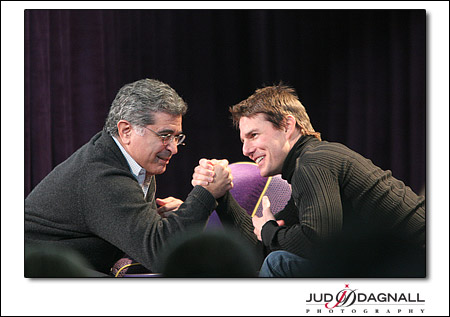
She described Yang's organizational chart of Yahoo! as something out of Dilbert; she agreed with the "Peanut Butter Manifesto" -- a 2006 internal document penned by a Yahoo! vice president that pointed out the internal problems with the company -- at a May conference with Terry Semel and Sue Decker (Yang's predecessors in the top two roles) in the audience; and at the same conference, about 60 days before last week's announcement, she told the audience she would do a deal with Microsoft for "boatloads of cash."
After a $47 billion buyout offer from Microsoft last year for all of Yahoo!, followed by a proposed search deal with a $5 billion upfront payment, Yahoo! investors believed that Bartz finally had Yahoo! on the right track. She let the expectations run. The stock climbed to more than $17 from $13 before the search deal was announced.
Yet, last week's announcement saw Yahoo! shareholders get no upfront money from Microsoft. Instead, they get 88% of the ongoing revenue, or traffic acquisition cost (TAC) rates, from Microsoft in the partnership for the next three years. Meanwhile, Yahoo!'s shutting down its search engineering unit, which employs about 1,000, and saving on that ongoing investment.
Microsoft is getting a zero money-down, lease-to-own deal that allows it to swallow the No. 2 competitor in the fast-growing search market and achieve a credible market share level against Google(GOOG Quote). Despite the high TAC rate, you haven't been able to find one Microsoft shareholder irate about this deal, including me.
Bartz tried to explain the deal to her investors on the initial call by saying that instead of receiving "boatloads of cash," they were getting "boatloads of value" from the deal. The Street thought otherwise and butchered Yahoo!'s stock price.
For the first time in her Yahoo! tenure, she's contrite: "I made a mistake. I was never interested in doing it for upfront money. That doesn't help me operate a business."
Bartz can't have it both ways. She can't portray herself as the "grown up" cleaning up the mess that the kids who used to run the place left her with and then make such a rookie mistake in managing investor expectations. Either she knew 60 days ago that she was getting no upfront payment and made a misguided "boatload" comment, or Microsoft really turned the screws on her in the last few weeks and stuffed lousy terms down her throat that she had to take.
Her other explanations for doing this deal sound hollow. She said, "We didn't want to get into an arms race with Google and Microsoft in search." Then why did your board authorize spending billions on search companies and hundreds of millions of dollars in internal development of the much hyped and never effective "Project Panama" over the last three years?
Bartz said, "We didn't want to pay a lot of taxes on an upfront payment." Wouldn't your shareholders like to see you paying a lot in taxes on a payment as a sign that you had received a lot of money from Microsoft?
She said the market had changed a lot since 2008, when the full buyout offer for Yahoo! was still on the table. Yet, since Microsoft dropped the bid for Yahoo! on May 4, 2008, the Nasdaq is down only 17%, while the value of the deal Microsoft is paying to Yahoo! has dropped 90% (from $47.5 billion to $4 billion to $5 billion, according to Bernstein's Jeff Lindsay), and Yahoo!'s stock price has dropped 47%.
And, what's with the heavy "me" and "I" references in her explanations? I was under the impression that turning around a $20 billion company was a team sport.
These mistakes aside, the real blame here lies at the feet of the Yahoo! directors who have served on the board for the entire time that Yahoo! has failed miserably in search -- the most lucrative non-monopolistic business that modern business has ever known. Yahoo! has had plenty of chances to dominate this space for the last decade and has missed every one.
Yahoo! built its own search engine, which was the original mission of the company; the directors decided to outsource it to a then unknown company called Google, giving Google huge name recognition because of Yahoo!'s traffic; Yahoo! later determined search was a valuable business itself and paid $235 million for Inktomi in 2002, and $1.6 billion for Overture, which created paid search before Google created AdWords, in 2003; and the directors trusted Semel and Decker's promises that "Project Panama" would close the gap between Yahoo! and Google. Yahoo!'s search share is below 20% and the directors have now decided to shut down all internal search development and hand the keys over to Microsoft.
There are five Yahoo! directors who've sat in on all the deliberations about search in the last eight years: current Chairman Roy Bostock, Ron Burkle, Arthur Kern, Eric Hippeau, and Gary Wilson. Where is the accountability here? Why must Semel, Decker, and Yang face the music for strategic decisions that didn't pan out, while these five men avoid all scrutiny and criticism? It's an embarrassment for Yahoo! and each of these men's corporate reputations that they are still there.
We can't always be right, but each of these men has endorsed failure too many times to still retain a job as a fiduciary for Yahoo! shareholders.
-- Written by Eric Jackson in Naples, Fla.
At the time of publication, Jackson's fund had a long position in Microsoft.
Eric Jackson is founder and president of Ironfire Capital and the general partner and investment manager of Ironfire Capital US Fund LP and Ironfire Capital International Fund, Ltd.
Yahoo!(YHOO Quote) holds its annual meeting Thursday and, unlike the previous two meetings, I'm not attending this year. It's not that I think the company is doing such a great job; it's that I sold all my shares in Yahoo! last September after being dismayed by the poor decisions being made by the board and senior management despite the company's many assets.
I didn't hold out much hope that the board would make the necessary changes to get the company back on track, after listening to it justify turning down Microsoft's(MSFT Quote) buyout offer last year and ignoring the high number of protest votes cast against the re-election of several directors in the prior two years.
But I do have to give the Yahoo! board credit in one regard: It hired a great CEO in Carol Bartz, and I believe she is doing all the right things since she came aboard to turn this company around. If she is allowed to execute the turnaround path she's on (and, really, why wouldn't she be although I wouldn't put it past Yahoo!'s board based on its track record?), Yahoo!'s stock has a much better chance of outperforming Google's (GOOG Quote) in the next two years, even if Google's operating performance and search dominance continue apace.
With Bartz, what's not to like about her turnaround focus? I went back to the "Plan B" I put forward -- with the support of other retail investors -- to Yahoo!'s board in early 2007 and it appears that a majority of these changes have now happened or are in the process of taking place. It also was refreshing to hear Bartz say recently that she agreed with the "Peanut Butter Manifesto" -- an internal Yahoo! memo that went public in late 2006 that called for much greater focus and simplification of overlapping efforts at the company.
Bartz hasn't let what I believe is a poor board of directors get in her way. For this reason, I was intrigued by her comments on Sunday to the Stanford Business School's Director's College. Bartz was full of opinions on what makes for a good board, with as many barbs tossed in the direction of sleepy directors as shareholder activists. The highlights were published by Barron's and offer a refreshingly candid viewpoint of a CEO on the topic of what makes boards work.
Here's where I think Bartz is right and where she's off-base.
Where she's right:
1. Getting a board of "high achievers" to work together well is tough.
Take any big company board and you'll find a gold-plated list of directors. These individuals haven't been asked to serve because they've been great team players. Typically, they've accomplished a lot. Throw six to eight "doers" into a room and ask them to get a task done as a team and they'll lurch around because no one has been appointed the clear leader and they all have an inherent bias to "jump in" and "fix" the situation. Throw into the mix that this is a team that only meets six times a year and you have a situation where a rhythm for working together never has a chance to develop.
In my view, without clear board leadership -- perhaps because there is no independent chairman, no lead director, or weak ones -- the pecking order of the group gets determined by a combination of who is favored by the CEO, board tenure, or dominant personality. Those factors don't translate into the most effective board discussions and decisions.
2. "We should have less middle-aged white guys."
Bartz pointed out that this narrow demographic makes up the vast majority of boards today. She spoke in favor of more diversity, but "not necessarily more women." (In fact, she discussed how one board tried to recruit her earlier in her career because it was "probably just looking for a skirt.")
I agree with her that it shouldn't matter if a director is named Jane, or John, or that he or she is this type or that type of person. What matters most is how that person will contribute to board meetings behind closed doors. The person needs to have a solid base of business and industry experience to knowledgeably examine and debate issues. Beyond that, diverse viewpoints can lead to better decisions if they help better analyze decisions. Unfortunately, Sarbanes-Oxley or stock exchange requirements define terms like "board independence" which lead to "middle-aged white guy" boards or diverse boards lacking sufficient industry experience.
3. Industry experience is a "must have" for any director.
Directors without industry experience are going to be less involved at board meetings. They are not going to want to make a comment or ask a question that might make them appear stupid. As a result, you can have an impeccably "independent" collection of directors surrounding insiders on a board, without any ability to advise or question those insiders about the business. This does no good for anyone -- unless those directors are well-paid and could care less about adding value or the insiders prefer lapdog directors.
"Industry experience" shouldn't limit directors to those who spent the majority of their careers working in that industry, but they must know enough about that industry to add value to any board discussion.
4. Have three hours of nothing planned at board meetings.
Bartz warns against the perils of over-structured and over-managed meetings. In my opinion, this is a common problem most boards have in which there is no opportunity to really debate issues, because too many "business updates" and "issue approvals" have been scheduled. Sometimes, the most valuable parts of board meetings happen during the unstructured discussions which occur in smaller side meetings or over lunch. There is great value in unstructured time during these meetings (although you must guard against the flip side of too much endless loop discussions resulting in no decisions).
Here's where I think Bartz is off-base:
1. "'Shareholder activism' is a simple but stupid concept."
What I think she's getting at in this comment is that she believes no two shareholders are the same. Everyone wants something a little different. At the Yahoo! annual meeting last August, people lined up to comment on, among other things, how (a) the board and management oversaw poor performance and inexplicably turned down the now-generous looking Microsoft offer, (b) Yahoo! didn't do enough to further human rights in China, (c) Yahoo!'s management had been unfairly criticized, and (d) Yahoo!'s fantasy sports content was fantastic and they should "keep it up."
Bartz was implying that anyone claiming to be a "shareholder activist" is really misrepresenting his own vested interests and those of the larger group. In my view, Bartz has a clear idea of where she wants to go as a manager and doesn't like anyone -- whether it's an incompetent director or misguided shareholder -- getting in her way. Sure, shareholders are a "big tent" -- just like political parties -- but they all follow certain universal truths, such as wanting to see the stock price go up (whether you're in a union, a pension holder, or an employee). She shouldn't paint activists with one brush, just as she goes out of her way to remind us that commentators shouldn't call her "old" because she's 60.
2. Get more current executives to serve on boards.
Bartz's solution to the "middle-aged white guy" problem is to get more executives from other companies to serve on boards. This would not only include CEOs but other senior talent coming up through the ranks that would bring more youthful perspectives with industry experience. I worry that these executives are already too overloaded by their day jobs and, although they'd likely want to add a few directorships to beef up their resumes, they would find it difficult keep up with the needed prep work, travel and participation in board and committee meetings.
These more youthful members of a board might also find it difficult to sit on the Cisco(CSCO Quote) board (as Bartz did when she met Jerry Yang) and challenge John Chambers, for example, about assumptions he was baking into next year's budget. In some ways, Sue Decker is a cautionary tale of the solution Bartz is proposing to the problem of narrow boards.
Decker, the former Yahoo! president, never really was able to get the company turned around successfully and yet kept piling on more board seats, including Intel(INTC Quote), Costco(COST Quote) and Berkshire Hathaway(BRK.A Quote)). As a Yahoo! shareholder during her tenure, I wished she'd never taken on any outside board seats and simply done her job, the remains of which Bartz is now trying to clean up.
From where I sit, Carol Bartz is doing all the right things as an operator of Yahoo! I hope she also will transpose many of her good ideas on corporate governance to the Yahoo! board, which could sorely use them.
Note: A new shareholder rights group called the Shareowner Education Network will be launched in Washington on Thursday, backed by some of the largest pension funds in the country. It will support issues such as promoting a shareowners bill of rights, mutual fund reform and proxy voting education. What's different about this group is that it's particularly focused on education and engaging retail shareholders as a group on these issues.
At the time of publication, Jackson was long Microsoft.
Eric Jackson is founder and president of Ironfire Capital and the general partner and investment manager of Ironfire Capital US Fund LP and Ironfire Capital International Fund, Ltd.
Throughout these past weeks of the Yahoo! proxy fight, we've heard a lot of opinions about Yahoo! from lots of stakeholders except one group: current Yahoo!s.
We've heard Roy Bostock and the board defend themselves for the handling of the Microsoft deal. We've also heard Microsoft's side of the story.
We've heard from Carl Icahn, through his colorful letters, and other shareholders including me. We've also heard from Jerry and Sue Decker.
We've even heard from the stock analysts and industry analysts -- even though they have no skin in the game (although neither do some members of Yahoo!'s board -- but Mr. Bostock and Mike Callahan assured us on Friday that those board members now follow a rule that they have 3 years in which to get some skin in the game).
But, we have never really heard from the Yahoo! employees through these haggard last few weeks. Some might argue, they have the most skin in the game of any Yahoo! stakeholder.
For investors, we have diversified portfolios. Yahoo! is but one position in many we hold. For employees, Yahoo! is their livelihood. They have the most to gain if the company turns itself around; and the most to lose if it doesn't.
The press always wants to hear from this group to round out the varied points of view they display in their stories. But employees decline, for fear of their jobs.
Occasionally, you see a comment from a Yahoo! employee leaked to Kara Swisher, TechCrunch, or Valleywag. However, there is no place where a community of Yahoo! employee voices can converge to speak (anonymously) in a way which allows thoughtful exchanges of points of view.
For example, Jerry says that Yahoo! has a plan and is executing against it. I have heard from several Yahoo! employees that execution is (and has historically been) a major problem. Who's right? Maybe I spoke to a few people with axes to grind. Maybe the vast majority of the 14,000 Yahoo!s agree with Jerry - or maybe they don't.
As a shareholder, I sure would value reading their opinions in their full text, unedited. Because, here's the thing: pointing out a problem doesn't make it worse, it helps fix it. If there's a problem, shine a light on it. Sunlight is the best disinfectant.
Therefore, I would like to offer this blog "Breakout Performance" for such a purpose -- pointing out what's right and what's wrong with Yahoo! To do so, feel free to comment anonymously to this post. Or, if you prefer, send me an email and I will post several comments (without email addresses) in future posts to this site.
If you like this idea but prefer to share your thoughts on a different site or in a different way, let us know below the means you think would be most effective. I don't really care where the comments go.
Let me strongly state that I think it's important that they be in one spot. When different voices of employees get scattered across Valleywag, Swisher, TechCrunch, Silicon Alley, and other outlets, they lose their power, because most will read only one here or there, not all of them together.
Let's hear from the employees who are the heart and soul of Yahoo! What's right and what's wrong with your company? Feel free to complain if you think it's deserved, but let's also be constructive. What needs to change and how could it change? What specifically should happen to make this company great again?
Did anyone at the Yahoo!-plex on First Avenue celebrate the recent one-year anniversary of Brad Garlinghouse's (in)famous Peanut Butter Manifesto leaked to Kevin Delaney?
Today, I submitted a finalized version of our "Plan B" for Yahoo! to their Corporate Secretary as nine points of business that I will ask to bring forward at this May's Yahoo! annual meeting of shareholders.
As you know, on January 7th, I first asked fellow Yahoo! shareholders to contribute your ideas towards a "Plan B" that we could present as an alternative to Yahoo!'s Board, Management, and Shareholders. You have responded with very thoughtful and creative advice, as well as with your support of the Yahoo! common shares you own.
I have spoken to half of Yahoo!'s largest institutional holders since then and, while none will publicly support our "Plan B," they all have vowed to review it thoroughly and vote independently. All acknowledge that they are aware that Google has performed 21 times as well as Yahoo! since Google's August 2004 IPO (+336% vs. +16%).
As of this morning, our group of stockholders collectively owns 911,666 shares worth $29MM. We aim to grow that group between now and the May annual meeting.
Today, I also put my name forward to the Yahoo! Corporate Secretary to be included on the slate of possible directors to be elected at the annual meeting by shareholders. I am running on this "Plan B" and because of your support.
Some have told me I will need $200,000 to run a "proxy contest" to get elected to the Yahoo! board and -- even with that -- the odds are stacked against us, as most institutional shareholders tend to be "pro-management." I don't have $200,000, but I have a love for Yahoo!, the great employees who work there, and we have a plan that has merit -- thanks to your input. We'll see what happens.
Thanks again for your support. Here's the plan....
Finalized Version of "Plan B":
1. Terry Semel should be Immediately Replaced as Yahoo!’s Chairman and CEO
We believe that Yahoo! requires a new Chairman and CEO and Terry Semel no longer deserves these key two jobs.
During his tenure, Terry Semel has made the following strategic missteps:
· Failing to buy Google in 2002. Mr. Semel claims that he could have done this in 2002 for $3B[1]. It would have been a bargain, compared to Google’s current $144B market capitalization today.
· Destruction of Yahoo! Shareholder Value in Past 2 Years. Yahoo!’s stock price is down 7% for the past 2 years, compared to Google’s 151% increase and NASDAQ’s 20% increase over that same time period. This decrease for Yahoo! still includes the 14% increase in its stock price since our “Plan B” campaign of shining a light on Yahoo!’s underperformance which began on January 7th, 2007.
· Continued Loss of Share in Search. While Yahoo! has hastily pushed out the new Panama platform in the last month, partly in response to criticism from our stockholder group and other critics, there is no denying that it has lost critical momentum and share in the battle for search advertising dollars. In fact, according to numbers from Banc of America Analyst Brian Pitz, Yahoo! lost share faster than Microsoft in the last quarter and year vis-à-vis Google.[2] Even with a better ad platform running, more and more users are turning away from Yahoo! for their search needs.
· Costly creation of Yahoo! Media Group and Burbank Campus. This entire investment has been a write-off for Yahoo!’s shareholders. Lloyd Braun was hired to lead this group in November 15, 2004.[3] The company announced it was setting up stakes in Burbank on January 15, 2005.[4] Braun left Yahoo! on December 6, 2006.
· Missing the Need to Overhaul the Overture Platform at a Critical Time in its Drive to Compete with Google. According to Fred Vogelstein’s Wired article last month: “When Yahoo decided it was going to buy Overture in 2002, Overture dominated search-related advertising; its revenue was two times Google's. By the time the deal was actually announced in 2003, the two companies were neck and neck. Two years later, Google's revenue was 2.5 times Overture's.”[5]
· Failing to buy YouTube in 2006. Google purchased this in late 2006 and Yahoo! has yet to define a credible video offereing.
· Failing to buy MySpace in 2005. MySpace recently surpassed Yahoo! for total page views.[6]
· Outsized Compensation for Small Shareholder Return. Mr. Semel’s first 4 years’ total compensation was $258.29MM[7]. In 2005, he received $56.8MM in compensation[8]. According to the 2006 proxy, Mr. Semel had $235MM in unexercised stock options, for a total of $550MM in total compensation, to date.[9]
Bob Nardelli started as CEO of Home Depot on December 1, 2000, and collected approximately $300MM in compensation for his 6 year tenure with a $210MM severance package. Thus, his combined compensation for his time at Home Depot was $510MM. Terry Semel is already ahead of Mr. Nardelli, before mr. Semel receives any severance/retirement package.
Last June, Yahoo!'s compensation committee set Mr. Semel's annual salary to $1 for the next 3 years. However, it included an annual grant of 1MM shares (which would amount to approximately $30MM at today's stock price) with further options that can be exercised above $31. A guaranteed $30MM a year is not the same as being paid $1.
Terry Semel and his defenders will argue that Yahoo!’s stock price has gone up 227% since his start date of May 1, 2001 through today. However, if you properly analyze his tenure, there have been three distinct periods:
May 2001 – December 2002: Yahoo! drops 7% in value. January 2003 – December 2004: Yahoo! grows by 355% in value. January 2005 – Present: Yahoo! drops 14% in value.
There has only been one period in which Yahoo!’s valuation has increased under Terry Semel’s watch and we would argue that this had to do with a general recovery in the Internet Advertising market, which benefited Yahoo! and its two main rivals – Google and Microsoft – during this time. The rising tide lifted all boats/companies which were dependent on the ad market for the majorities of their revenues. As Yahoo! also had amassed enough cash before Mr. Semel’s arrival, it had the fortitude to go through the Internet Advertising drought which claimed the lives of many pre-Bubble competitors (e.g., Excite, Lycos, etc.). The only credible remaining search players post-Bubble were Yahoo!, Google, and Microsoft and advertising dollars could only go to these three players after the general market recovery began to happen. Yahoo! benefited from this rising tide (especially in display ads), for a while.
Yahoo!’s market share has been flat and steadily eroding over the past 4 years, while Google’s has dramatically accelerated. Yahoo! had a 28.9% share in February 2003 (according to Neilsen NetRatings[10]), compared to 29.5% for Google. However, Yahoo!’s share had dropped to 19.5% as of December 2006, and Google’s had increased to 65.4% (according to Bank of America Equity Research). The total ad market has increased from $1.4B in 2002[11] to $15B annually today (and growing at 50% per annum)[12]. Had Yahoo!, under Terry Semel, been able to grow its share to even 30% today, Yahoo! shareholders would have received an additional $1.6B in revenues last year – or 25% higher than their reported $6.4B in revenues, but still well below Google’s $10.6B in revenues last year.
The bottom line is that – in the most relevant and direct comparison to its arch-rival, Google – since Google’s IPO in August 2004 through today, Google’s stock price is up 336% versus Yahoo!’s stock price being up only 16%. Google has grown its shareholder value 21 times more efficiently than Yahoo! over this time period, when the Internet ad market has been booming. We don’t believe that any CEO should keep his/her job when your #1 competitor is 21 times as successful as you over an extended period of time.
Conclusion: Yahoo!’s board needs to immediately remove Mr. Semel – who is 64 – and begin a search process to find a new Chairman and CEO. This Chairman and CEO search should examine all qualified internal and external candidates. 2. Terry Semel, Robert Kotick, Roy Bostock, Ron Burkle, Eric Hippeau, Arthur Kern, and Gary Wilson should be Immediately Replaced on Yahoo!’s Board of Directors.
Terry Semel ultimately reports to Yahoo!’s board of directors. The board must be held accountable for the numerous missteps outlined above. Of the 10 directors, we believe 7 should resign or Yahoo! shareholders should withhold votes for them at Yahoo!’s 2007 annual meeting of shareholders.
We are in favor of only Jerry Yang (a Yahoo! co-founder), Ed Kozel, and Vyomesh Joshi returning. The latter two recently purchased shares directly in Yahoo!, while the other Yahoo! directors have only exercised stock options of late.
3. Shutter the Yahoo! Media Group and campus in Los Angeles.
The Yahoo! Media Group has been a failure. There are no meaningful outputs from the group to speak of which have had any positive shareholder value-creating impact. Yahoo! shareholders should not incur additional investments in this group and repatriate key employees back to Sunnyvale, while eliminating other positions.
4. Make additional R&D investments in the Technology Group.
"Plan B" is about accountability to Yahoo! shareholders. The last two years have not delivered the appropriate value to shareholders compared to Yahoo!'s competitors. Partly, this is due slowness to respond in the technical area of the business. While we continue to think that the company has some of the most talented engineers in the tech world, we believe that improvements need to be made within the Technology Group. Cost savings from shuttering Yahoo! Media Group and other internal efficiencies (see next point below) should be plowed back into R&D investment in the underlying Yahoo! Technology Group.
5. Reduce Overlapping Internal Divisions within the Company.
The Peanut Butter Manifesto[13] was one of the first internal recognitions that more efficiencies could be created within Yahoo! from streamlining the various groups. The del.icio.us group (coming from an external acquisition) is still a distinct group from the home-grown MyWeb. Flickr (another external acquisition) is still a distinct group from the original Yahoo! MyPhotos group. No justification can be made from keeping them as separate internal groups. This must be corrected immediately to improve the profitability of the organization. It would also help to clarify who, within Yahoo!, has distinct ownership and accountability for key deliverables – most notably as head of the Audience Group.
6. Institute a ‘Pay-for-Performance’ Plan for all Yahoo! Management.
At the same time as the new CEO is hired, the Yahoo! board should introduce a ‘pay-for-performance’ plan for all Yahoo! management. Bonuses should be tied to preset goals for increases in revenues, cash flow, and EPS. 7. Step up the Pace of the $3B Stock Repurchase Plan Announced in October 2006. In October 2006, in conjunction with its disappointing Q3 earnings, Yahoo! announced that its board had authorized a $3B stock repurchase over the next 5 years.[14] Yahoo!'s stock price bottomed out this same day at just under $23. The stock is up over 14% since we first announced our "Plan B" for shareholder value creation on January 7, 2007. We believe that there is considerable upside in the company's valuation – especially if the points in this plan are enacted. Therefore, we strongly wish to see evidence that the board of directors is accelerating the share repurchase now, rather than when the stock increases in value substantially further months down the road. 8. Begin a Modest Cash Dividend Immediately.
Fast-growing companies like Yahoo! typically pay no dividend, in favor of spending all cash on internal growth purposes (e.g., R&D). However, examples of tech companies growing and paying a dividend include National Semi, TI, and HP. Yahoo! needs to use its $3B cash position wisely to effectively compete and succeed for the long-term. Yahoo! should introduce an immediate annual dividend of 5 cents a share, which would only amount to $40MM a year (therfore, not inhibiting the company's ability to compete effectively). More important than the cash to shareholders (which does increase value in and of itself), the dividend would be an additional discipline to Yahoo! management to spend its cash wisely. It would also symbolize management's confidence in the business, moving forward, that it will plan for and can sustain this dividend to shareholders. 9. Remove Anti-Takeover Provisions which are not Shareholder-Friendly.
In the most recent Yahoo! 10-Q filing with the SEC[15], the final Risk Factor facing the company cited is: “Anti-takeover provisions could make it more difficult for a third party to acquire us.” The filing goes on to detail how the board of directors can thwart a takeover of the company by diluting shareholders, if necessary. These anti-takeover provisions are not shareholder-friendly. They do not serve shareholders' interests, but management's. They should be swept aside immediately.
Boards serve many functions but their most basic job is to hire and fire the CEO. It’s time for Yahoo!’s Board to fulfill its responsibility to its shareholders, users, and employees by firing Terry Semel and hiring someone else to get the company back on its footing.
In April 2001, Yahoo!’s Board hired Terry Semel. After the go-go days of the late ‘90s and a relaxed culture under its first CEO, Tim Koogle, the Board chose a 24-year Hollywood power broker. Semel was to bring marketing and focus to the company and inimitable connections with the old media content providers that could be harnessed by Yahoo! He has overseen a dramatic turnaround in Yahoo!’s stock price from $4.05 at its nadir to $26.50 today.
Yet, chronic complaints about ‘silos’ of competing groups after many acquisitions, lack of vision for where the company is going, some acquisition hits (e.g., Flickr, del.icio.us) but many misses (e.g., DialPad) and several notable bridesmaid non-moves (e.g., not doing deals with Facebook, MySpace, YouTube, or AOL), and general unease from within the ranks about where Yahoo! is going suggest that Terry Semel’s best days at Yahoo! are behind him. The company needs fresh eyes at the helm to avoid Yahoo! languishing only to be ignominiously acquired by a Microsoft or merged with an eBay down the road. Yahoo!’s shareholders, users, and employees deserve better and the Board should do its part.
Here is a short-list of what Yahoo’s Board needs to do now:
1. Fire Terry Semel. He’s lost his credibility to lead and he’s approaching 64 after 5 years in the job. There was a time for Tim Koogle to go, now is the time for Terry to go.
2. Hire a Credible Successor. Yahoo! employees and shareholders need to believe in this person. He/she must be able to clearly articulate a vision for where the company is going, fix the internal inefficiencies which exist, and drive a culture that ensures personal accountability. I recently suggested Susan Decker fits the bill. Vishesh Kumar of TheStreet.com has speculated to me that Jerry Yang might make a good fit. There are also many able external candidates.
3. Install a new “Presiding Director.” It’s admirable that Yahoo! took the step of creating the role of “Presiding Director” to constructively challenge its CEO and ensure sufficient debate on the Board. However, if I was Robert A. Kotick, the current “Presiding Director” who is also the full-time Chairman and CEO at Activision – brought in by Semel 2 years after Semel’s appointment and 20 years Semel’s junior – I would find it difficult to speak out in Board meetings against Semel. There is a natural deference to "the one who brought you to the dance." A new approach is needed in this important role.
4. Demand that all Yahoo! Directors buy meaningful amounts of YHOO stock. Yahoo! requires all its executives to buy and hold 3000 shares of stock, and it suggests its Directors own 12,000 shares of stock. Yet, as mentioned in an earlier post, these can be as a result of generous stock options or grants from Yahoo! At the moment, all outside directors are well above 12,000, thanks to these options. The problem with grants and options is that they are treated as "found money." Our research shows that companies where the outside Directors dig into their own pockets -- putting "skin in the game" -- and purchase meaningful amounts of stock enjoy significant returns compared to their industry returns in subsequent years.
6. Ask all Yahoo! Executives not to serve on other Non-Internet Boards. Although it symbolizes how well she is thought of by F500 companies, Yahoo! shareholders, employees, and users do not directly benefit from Susan Decker spending time each quarter as a Director for Costco and now Intel. Her professional time should be 100% focused on Yahoo!’s problems and solutions -- not on reviewing the quarterly board packages for Costco and Intel. One response to this suggestion might be that serving on these boards is good for Ms. Decker, as it exposes her to new ideas and practices that she can bring back to Yahoo!, making her less insular. I respectfully disagree. In this post-SOX world, serving as a Director is a major time commitment and there are many able non-executives to fill the need. There are also many other ways that Susan Decker can stay abreast of new trends and practices in her current role without being a Director elsewhere, guarding against a closed-minded view of the world. There is also evidence in this study that executives serving on boards of other companies (like Costco) that are outside the "computer" industry are bad for the home company's stock price.
It’s been over two weeks since the “Peanut Butter Manifesto” appeared in print for all to read. To this point, the Board and Yahoo! have remained silent on it. The Board needs to move swiftly to replace Terry Semel with someone else who can go through the necessary and difficult work of breaking down the internal silos that exist at Yahoo! and drive it through its next stage of growth. This is not a quick-fix. The new CEO will need time to facilitate this make-over.
*Updated6/20/07: Congratulations to Jerry Yang who was announced as Yahoo!'s next CEO on Monday.*
After the pre-turkey "Peanut Butter" memo, speculation is swirling on who's in the running for Terry Semel's corner cube in Sunnyvale.
Here are Breakout Performance's odds on the front-runners:
Susan Decker: 3 - 2. Positives: Insider; well-respected by most Yahoo!s, well-liked by street. Question Marks: Technical enough?, too 'analysis paralysis'?, technical vision for company.
Dan Rosensweig: 4 - 1. Positives: Insider; technical enough background; COO tenure on the surface makes him first in line. Question Marks: Arrongant?, will the Yahoo!s trust/follow him?, too close to Semel?
Steve Berkowitz, SVP at Microsoft: 8 - 1. Positives: Knows search from Ask, MSN experience, relevant industry leadership experience with views of big and small companies, learned from Diller, Gates, Ballmer. Question Marks: Vision for company?, What are the big accomplishments he can point to on his resume.
Ross Levinsohn, Ex-President of Fox Interactive: 9 - 1. Positives: Great Internet track record: Fox, Altavista, Sportsline; Ideal time in his career trajectory to take that next step; He's gone from Hollywood, FL, to Hollywood, CA, and now he's ready for the Hollywood of Northern California; Available. Question Marks: He's a deal-maker, but can he integrate?, No turnaround experience with a company the size of Yahoo!, Another guy from Hollywood? Would the Yahoo!s get on board? Would this be as attractive to him as starting a hedge fund? Raising a fund while at Fox -- can the board trust him?
Shona Brown, EVP BD, Google. 10 - 1. Positives: Rhodes Scholar, PhD, McKinseyite, Best-Selling Business Author before coming to Google -- i.e., bright!; Been studying/working in this industry for 12 years. Question Marks: Too junior for CEO slot; Why leave when Google's on a roll?
Joanne K. Bradford, new head of MSN: 15 - 1. Positives: Got online Ad religion before anyone else at MSFT, helped turn culture around at MSN, big company experience and ad experience, lives in Bay Area. Question Marks: Seasoned enough for top slot?, could use more time leading major team at MSN.
Bob Pittman, ex-head of AOL: 35 - 1. Positives: Disciplined; holds others accountable; large media company experience; Internet experience; 53 years old -- still time left on the clock. Question Marks: Does he want to get back in to the spotlight?, His departure from AOL was tied to his lining up with the aggressive AOL targets - credibility with Wall Street? Does the Yahoo! board want this baggage, especially from a competitor?
Jonathan Miller, ex-head of AOL: 45 - 1. Positives: Relevant CEO-type experience at Yahoo! competitor; can point to some content innovations and general turnaround of that group; fiercely loved by some ex-employees. Question Marks: Vision?; too slow; could he gain loyalty of Yahoo!s?
Jerry Yang, Chief Yahoo!: 50 - 1. Positives: 1 of the co-founders; well-respected; knows the culture; technical vision. Question Marks: Too junior? (37); Does he want it?; What leadership experience does he have to take on this role?
Jeff Mallett or Anil Singh, ex-Yahoo!s: 250 - 1. Positives: There from the start; Who doesn't love a "prodigal son"/redemption story?; Yahoo!s would rally round the old guard; Think John Mack at Morgan Stanley. Question Marks: The Board and Jerry Yang would be reluctant to go back on an old decision (although it's not inconceivable, especially if there was board turnover as well); Would the new Yahoo!s rally as much as the old? -- old guard/new guard culture conflicts; Yahoo! is much bigger today than it was and -- as much as I love a "feel good" story -- what have these guys done since leaving to keep their management skills sharp?
Guy Kawasaki, The House of Kawasaki: 275 - 1. [Squeaked in ahead of Calacanis.] Positives: Visionary to the extreme; Who doesn't love this guy?; He's local. Question Marks: Not an operator (but a great blogger); Why would he want the stress - he's got a pretty good gig as it is.
Jason Calacanis, ex-AOL: 285 - 1. Positives: Well-known among the Valleywag set; Small & large company experience at Weblogs and AOL. Question Marks: Too young; not ready for prime-time CEO.
Marissa Mayer, Google: 10,000 - 1. Positives: Well-known/respected by tech folks. Question Marks: Too junior; little leadership experience.
Brad Garlinghouse, Yahoo! VP: No Chance. No board would ever pick him after leaking the memo.